In many engineering and system integration projects, the term positioner is frequently used. However, when it comes to actual system design, different types of positioners serve very different purposes.
Two commonly discussed options are pan tilt positioners and horizontal rotary positioners. While they may appear similar at first glance, they are designed for different motion requirements and application scenarios.
This article, provided by Ziwin, explains the key differences between a pan tilt positioner and a horizontal rotary positioner, and helps clarify when each option is the better choice.
What Is a Pan Tilt Positioner?
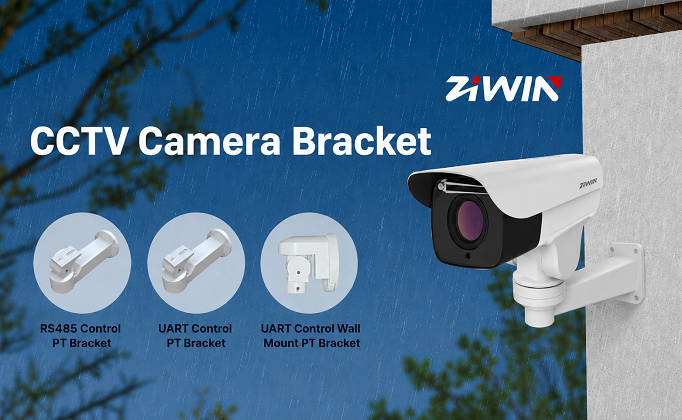
A pan tilt positioner is a positioning platform that provides two degrees of freedom:
Pan (azimuth rotation)
Tilt (elevation movement)
By combining these two axes, a pan tilt positioner allows a mounted device to move and point in both horizontal and vertical directions.
Pan tilt positioners are commonly used in applications where full directional flexibility is required, such as:
Because of the additional axis, pan tilt positioners offer greater motion flexibility, but they also introduce higher mechanical complexity and control requirements.
What Is a Horizontal Rotary Positioner?
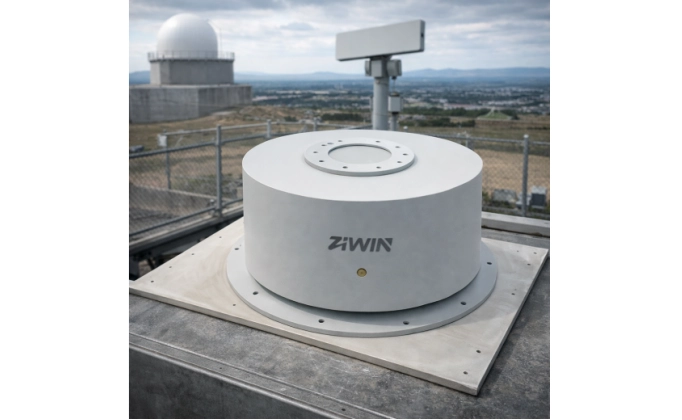
A horizontal rotary positioner, also referred to as an azimuth positioner, provides controlled rotation around a single horizontal axis.
Unlike a pan tilt positioner, it focuses exclusively on azimuth movement. This design makes it well suited for systems where vertical motion is either unnecessary or handled by other means.
Horizontal rotary positioners are widely used as positioning bases for:
Antennas
Radar modules
RF and acoustic sensors
By limiting motion to a single axis, the platform achieves higher mechanical stability, simpler control logic, and often greater load capacity.
Key Differences in Motion and System Design
The fundamental difference between a pan tilt positioner and a horizontal rotary positioner lies in the number of controlled axes.
A pan tilt positioner offers two degrees of freedom, which increases flexibility but also adds mechanical components, control loops, and potential points of failure. A horizontal rotary positioner, on the other hand, simplifies the system by focusing on a single, well-defined motion.
In many practical systems, fewer axes result in:
Improved stability
Higher positioning repeatability
Reduced system complexity
Easier long-term maintenance
This is why single-axis solutions are often preferred when system requirements allow.
When Is a Horizontal Rotary Positioner the Better Choice?
In many real-world applications, full pan-tilt motion is not required. Instead, systems primarily rely on azimuth control to perform their intended function.
A horizontal rotary positioner can be considered a specialized form of a pan tilt positioner when only azimuth motion is required.
Typical scenarios include:
Directional antenna alignment
Radar scanning and target detection
RF signal direction finding
Acoustic source localization
In these cases, adding a tilt axis does not significantly improve performance, but it does increase system complexity. A horizontal rotary positioner provides a more efficient and robust solution.
When Is a Pan Tilt Positioner Necessary?
Despite the advantages of single-axis platforms, there are applications where a pan tilt positioner remains the correct choice.
Pan tilt positioners are necessary when:
Targets move significantly in both azimuth and elevation
Vertical pointing accuracy is critical
The system must track objects in three-dimensional space
Examples include long-range optical tracking systems and observation platforms deployed in complex terrain environments.
Choosing the Right Positioner for Your Application
Selecting the right positioner is a system-level decision rather than a component-level one.
Key questions to consider include:
Do you need both azimuth and elevation control?
Is mechanical stability more important than motion flexibility?
What payload weight and accuracy are required?
How complex should system integration and maintenance be?
Answering these questions early in the design phase helps ensure that the selected positioner aligns with real operational needs.
Conclusion
Pan tilt positioners and horizontal rotary positioners are not competing solutions, but complementary ones. Each serves a distinct role in positioning and motion control systems.
A pan tilt positioner provides maximum directional flexibility, while a horizontal rotary positioner delivers simplicity, stability, and efficiency when azimuth control is the primary requirement.
Understanding the difference between these two types of positioners is essential for building reliable and effective antenna, radar, and sensor-based systems.
 +86-15022658927
  sales@ziwincctv.com
  English
 français
 Deutsch
 Español
 italiano
 русский
 português
 العربية
 tiếng việt
 ไทย
ไทย Türkçe
 Pilipino
 עברי
עברי Afrikaans
 Polska