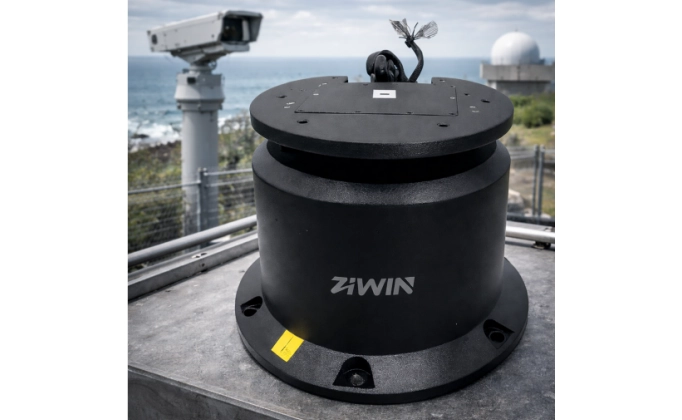
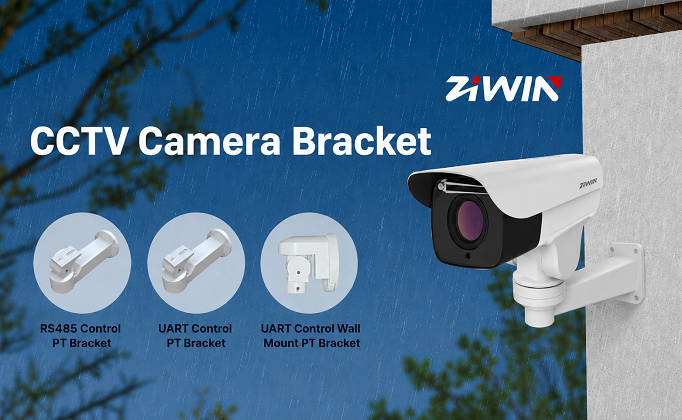
A horizontal rotary positioner is often overlooked because of its simple structure. However, in many real-world systems, it plays a critical role by enabling precise and controlled azimuth movement for a wide range of devices.
Rather than focusing on complex multi-axis motion, a horizontal rotary platform concentrates on what many systems truly need: accurate, stable, and repeatable horizontal rotation. This makes it a fundamental building block in modern surveillance, communication, detection, and monitoring solutions.
This article, provided by Ziwin, focuses on what a horizontal rotary positioner can be used for, how it supports different devices, and what functions it enables at the system level.
What Is a Horizontal Rotary Positioner Used For?
At its core, a horizontal rotary positioner is used to orient directional devices toward a specific azimuth angle or to scan an area through controlled horizontal rotation.
Its primary purposes include:
Aligning devices toward a target direction
Scanning a defined area or full 360° field
Tracking targets that move across azimuth angles
Synchronizing multiple sensors along a shared rotation axis
In many applications, controlling the horizontal direction alone is sufficient to achieve the required operational performance, making a single-axis platform both practical and efficient.
Using a Horizontal Rotary Positioner with Antennas
One of the most common uses of a horizontal rotary positioner is antenna orientation.
Directional antennas often require precise azimuth alignment rather than vertical movement. By mounting an antenna on a horizontal rotary platform, the system can:
Point the antenna toward a specific direction
Perform sector-based or full-area scanning
Search for and lock onto communication signals
This configuration is widely used in communication infrastructure, radar antenna systems, and anti-drone detection solutions, where reliable azimuth control is essential.
Using a Horizontal Rotary Positioner with Radar Systems
Radar systems frequently rely on horizontal scanning to detect and track targets across a wide area.
When a radar module is mounted on a horizontal rotary positioner, it can:
Perform continuous 360° azimuth scanning
Monitor specific sectors with controlled rotation
Track moving targets by adjusting the radar’s orientation
This approach is commonly used in perimeter security, coastal monitoring, airport surveillance, and counter-UAV systems, where stable and repeatable scanning is required.
Using a Horizontal Rotary Positioner for RF Sensing and Direction Finding
RF sensing and direction-finding systems are designed to determine the direction of a signal source rather than its elevation.
A horizontal rotary positioner enables these systems to:
Rotate RF sensors to identify signal direction
Perform systematic frequency and azimuth scanning
Improve localization accuracy through controlled motion
This usage is common in spectrum monitoring, electronic surveillance, and wireless signal analysis applications.
Using a Horizontal Rotary Positioner with Directional Acoustic Devices
Directional acoustic systems depend heavily on orientation to detect or project sound accurately.
Mounted on a horizontal rotary platform, acoustic devices can:
Align toward detected sound sources
Track moving acoustic targets
Improve localization accuracy through azimuth adjustment
Such configurations are applied in perimeter security, public safety monitoring, and specialized detection systems where sound direction is critical.
Using a Horizontal Rotary Positioner for LiDAR and Scanning Sensors
LiDAR and laser-based scanning sensors often require controlled rotation to cover large areas efficiently.
With a horizontal rotary positioner, these sensors can:
Perform 360° environmental scanning
Map perimeters and surroundings
Collect spatial data for analysis and modeling
This usage is common in intelligent transportation systems, industrial inspection, and automated monitoring solutions.
Using a Horizontal Rotary Positioner for Multi-Sensor Systems
In advanced applications, multiple devices are often integrated onto a single platform.
A horizontal rotary positioner allows different sensors to:
Share a common azimuth reference
Maintain consistent directional alignment
Operate together in a synchronized manner
This is especially valuable in anti-drone systems, border security platforms, and critical infrastructure protection, where multi-sensor coordination is required.
What Functions Does a Horizontal Rotary Positioner Enable?
Across these applications, a horizontal rotary platform enables essential system-level functions, including:
Precise azimuth positioning
Continuous or indexed horizontal rotation
Sector-based scanning and patrol
Preset-based directional movement
Coordinated operation of multiple devices
These functions form the operational foundation of many modern detection and monitoring systems.
Why Horizontal Rotation Is Often All You Need
In many real-world scenarios, adding vertical movement increases system complexity without providing additional benefits. A single-axis horizontal rotary positioner often delivers:
Higher stability under load
Greater mechanical reliability
Easier system integration
Lower control and maintenance complexity
For applications where direction and coverage are defined primarily by azimuth, a horizontal rotary platform provides an optimal and efficient solution.
Conclusion
A horizontal rotary positioner is a versatile and purpose-driven platform designed to support a wide range of directional devices.
By enabling precise horizontal rotation, it supports antennas, radars, RF sensors, acoustic systems, LiDAR units, and integrated multi-sensor payloads across surveillance, communication, and detection applications.
Understanding what a horizontal rotary positioner can be used for is the first step toward selecting the right platform for building reliable and effective system-level solutions.
 +86-15022658927
  sales@ziwincctv.com
  English
 français
 Deutsch
 Español
 italiano
 русский
 português
 العربية
 tiếng việt
 ไทย
ไทย Türkçe
 Pilipino
 עברי
עברי Afrikaans
 Polska