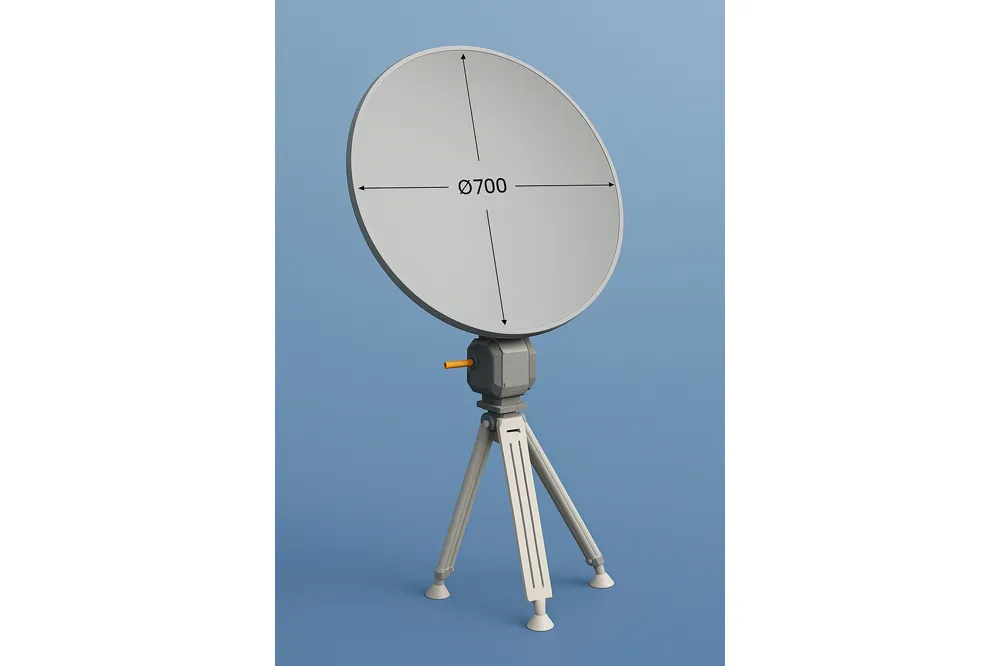
Selecting the right antenna pan tilt unit is essential for ensuring stable, accurate antenna positioning in wireless communication, radar tracking, and long-range microwave systems. A well-designed pan tilt system improves pointing accuracy, enhances link reliability, and maintains performance under wind, vibration, and harsh outdoor environments. This guide provides a clear, practical framework to help engineers choose the most suitable antenna pan tilt solution for different applications.
What Is an Antenna Pan Tilt System?
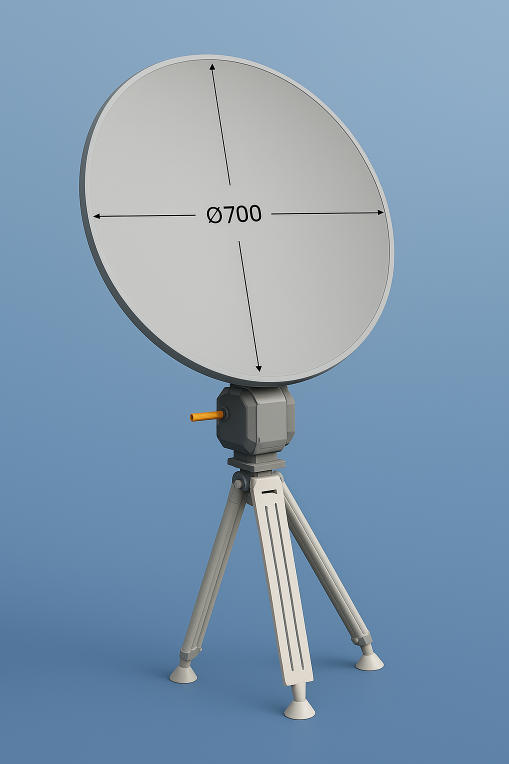
An antenna pan tilt system (also called antenna pan tilt unit, antenna positioner, or pan tilt unit) is an electromechanical device that rotates an antenna along two axes:
- Pan – horizontal rotation
- Tilt – vertical rotation
This enables applications such as:
- UAV / drone tracking
- Radar scanning & search patterns
- Long-range microwave and wireless link alignment
- Coastal and border surveillance
- Maritime communication
- Satellite and point-to-point microwave systems
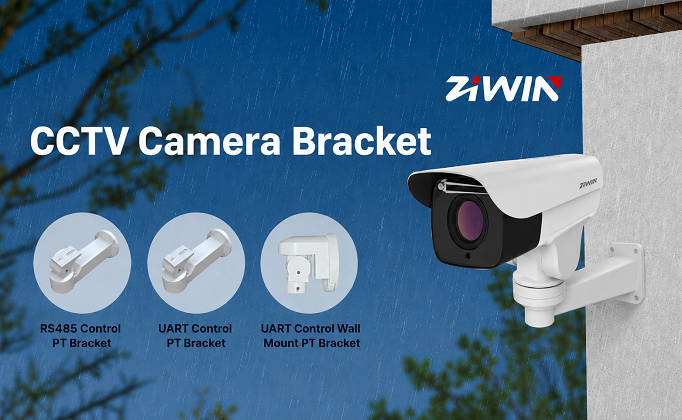
Antenna pan tilt units must withstand high torque, precision requirements, and harsh environments—much more demanding than standard camera PTZ mechanisms.
Step-by-Step Selection Framework
To choose the correct antenna pan tilt unit, evaluate:
1. Mechanical load & torque
2. Wind load performance
3. Pan & tilt rotation range
4. Speed & acceleration
5. Precision, accuracy & backlash
6. Drive mechanism type
7. Communication interface
8. Slip ring requirements
9. Environmental durability
Mechanical Requirements: Load, Torque & Wind
3.1 Static Load Capacity
Determine total payload:
- Antenna + radome
- RF amplifiers, LNAs, LNBs
- Brackets & adapters
- Cables and connectors
Always select a PTU with 30–50% extra load margin.
3.2 Center of Gravity & Torque
Large antennas create significant torque due to long moment arms.
Check:
- Maximum allowable torque (N·m)
- Center-of-gravity offset
- Need for counterweights
3.3 Wind Load
Wind has major impact:
- Large antennas behave like sails
- Causes shaking and tracking errors
- Can overload tilt axis if undersized
Motion Performance Requirements
4.1 Pan & Tilt Rotation Range
Typical ranges:
- Pan: 0–360° continuous rotation (via slip ring)
- Tilt: –90° to +90° or 0° to +180°
4.2 Speed & Acceleration
Application | Typical Speed
- Precision alignment: 0.05–5°/s
- General tracking: 5–30°/s
- UAV / radar tracking: 30–80°/s
Acceleration is critical for dynamic tracking tasks.
Precision, Repeatability & Backlash
Key parameters:
- Resolution – smallest movement step
- Accuracy – command vs actual angle
- Repeatability – preset return precision
- Backlash – mechanical play in gears
Long-range communication often requires 0.01°–0.05° precision.
Different PTUs use different internal drive technologies.
Drive Mechanism Comparison:
Mechanism | Advantages | Best For |
Worm-gear | Strong torque, cost-effective, stable | Heavy antennas, outdoor installations |
Servo-motor | Smooth motion, high precision, fast speed | UAV tracking, radar |
Direct-drive | Zero backlash, extreme precision | Military, aerospace, scientific research |
Most antenna PTUs use servo + worm-gear hybrid design for high torque and smooth motion.
Control Interface & Integration
Common interfaces:
- RS-485 / RS-422 – industrial standard
- CANBUS – robotics & vehicle systems
- Ethernet (TCP/IP) – radar, multi-sensor systems
- Wireless – mobile or temporary installations
Recommended: Ethernet + RS-485 for maximum flexibility.
Slip Ring Requirements
Slip rings support 360° continuous rotation. Channels may include:
- Power (12V / 24V / 48V)
- RS-485 / CAN / Ethernet
- RF coaxial rotary joints
- Fiber optic rotary joints
Environmental Protection
Antenna PTUs must handle severe outdoor conditions.
Environmental Factor | Required Specification |
Waterproof | IP66 / IP67 |
Temperature | –40°C to +70°C |
Salt-fog resistance | ≥ 96 hours |
Wind load | 15–40 m/s |
UV resistance | UV-proof coatings |
Vibration | Tower-grade / vehicle-grade |
Mechanical Interfaces & Installation
Check:
- Mounting hole pattern
- Top plate compatibility with antenna
- Cable routing
- Tower/mast load capacity
- Clearance for antenna tilt movement
Quick Selection Checklist
Mechanical
- Load (kg)
- Torque (N·m)
- Pan/Tilt angle range
- Speed & acceleration
- Backlash & accuracy
- Slip ring channels
Electrical / Control
- RS-485 / CANBUS / Ethernet
- Encoder type
- Power requirements
Environmental
- IP66/67
- Temperature
- Wind load
- Salt-fog resistance
- Vibration tolerance
Recommended Configurations by Application
Application | Load | Speed | Precision | Drive Type |
Long-range wireless | 3–10 kg | 1–15°/s | 0.05° | Worm-gear / Servo |
UAV tracking | 10–50+ kg | 30–80°/s | 0.01° | Servo / Direct-drive |
Radar | 20–80 kg | 30–80°/s | 0.01° | Direct-drive |
Coastal / marine | 15–100 kg | 0.1–30°/s | 0.05° | Heavy-duty worm-gear |
Military | 20–150 kg | 0.1–40°/s | 0.01–0.1° | Worm-gear / Servo |
Conclusion
A well-selected antenna pan tilt unit improves pointing accuracy, system reliability, and long-term operational performance in harsh outdoor environments. By evaluating load, torque, precision, speed, drive mechanism, slip ring design, and environmental ratings, engineers can ensure optimal compatibility and performance for any antenna system.
For project inquiries or customized antenna pan tilt solutions, please contact: sales@ziwincctv.com
 +86-15022658927
  sales@ziwincctv.com
  English
 français
 Deutsch
 Español
 italiano
 русский
 português
 العربية
 tiếng việt
 ไทย
ไทย Türkçe
 Pilipino
 עברי
עברי Afrikaans
 Polska