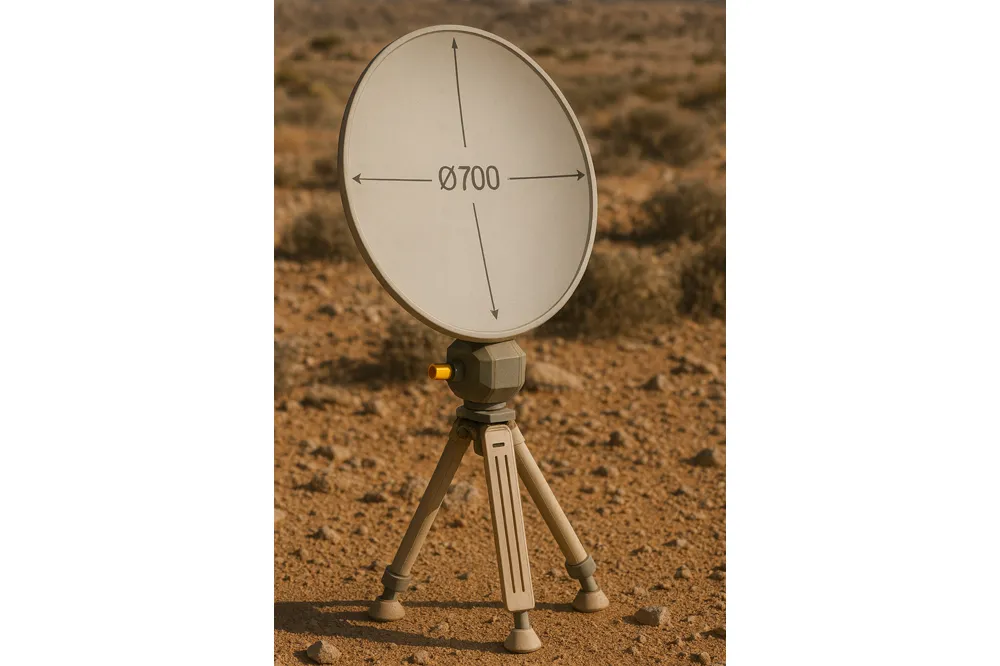
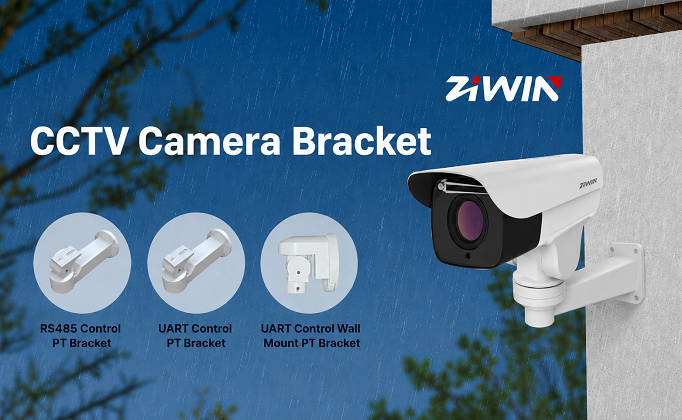
Outdoor PTU systems, long-range video links, security networks, radar units, and telemetry stations often rely on stable and precise antenna positioning. A properly installed pan tilt head not only enhances signal quality but also ensures long-term reliability in harsh environments. Below are the best practices to follow when installing an antenna pan tilt system outdoors.
Choose the Right Location
Ensure Line-of-Sight
- Place the antenna where there are no obstructions such as buildings, hills, trees, or metal structures.
- Even partial obstruction can cause significant signal loss.
Minimize Reflection and Interference
- Avoid mounting near large metal surfaces, AC units, or high-power electric equipment.
- Keep at least 2–3 meters of clearance from other RF antennas.
Consider Future Expansion
- Leave space for additional antennas, solar panels, and service access.
Key Factors to Consider
- Load capacity: Ensure the PT unit supports the antenna weight + cables + accessories.
- Pan/Tilt range: Ideally 360° endless rotation and ±90° tilt.
- Angular accuracy: 0.01°–0.1° depending on your application.
- Wind load resistance: Industrial PT heads should withstand 20–35 m/s wind speeds.
- Ingress protection: Outdoor units should be IP66 or IP67.
Why It Matters
A precise antenna pan tilt system allows:
- Stable long-range alignment
- Automatic tracking
- Reduced maintenance and downtime
Build a Solid Mounting Foundation
- Use rigid poles or towers with proper reinforcement.
- Ensure vertical alignment and minimize vibrations.
Electrical & Cabling Best Practices
- Use UV-resistant cables and waterproof sealing.
- Ensure slip ring specifications match rotation and signal requirements.
- Ground all components and use surge protection.
Outdoor Alignment and Calibration
- Perform rough alignment using compass/GPS.
- Use fine pan/tilt control for signal optimization.
- Enable auto-tracking if supported.
Environmental Protection
- Ensure proper operating temperature range.
- Protect against UV, rain, corrosion, and salt environments.
Common Mistakes to Avoid
- Using indoor PT units outdoors
- Ignoring wind load
- No grounding
- Improper cable routing
Maintenance Checklist
Monthly: Check cables, connectors, rotation smoothness
Quarterly: Inspect bolts, lubrication, IP seals
Annually: Re-align antenna, inspect corrosion
After storms: Verify structure and alignment
Conclusion
A well-installed pan tilt head dramatically improves outdoor antenna performance and reliability. Following the above best practices ensures long-term stability, accurate positioning, and minimal downtime. For high-precision antenna pan tilt solutions, industrial-grade PT units provide maximum durability and performance.
 +86-15022658927
  sales@ziwincctv.com
  English
 français
 Deutsch
 Español
 italiano
 русский
 português
 العربية
 tiếng việt
 ไทย
ไทย Türkçe
 Pilipino
 עברי
עברי Afrikaans
 Polska