Introduction
In Europe, cameras with infrared night vision play a critical role in urban security, transportation monitoring, port protection, forest fire prevention, and energy pipeline surveillance. When selecting a solution, customers often face the challenge of choosing between three major technologies: infrared night vision camera, laser night vision cameras, and thermal imaging camera. Each has unique strengths and limitations. This article explains their differences, highlights the main challenges for European projects, and provides practical guidance based on real case studies.
1. Three Types of Night Vision Cameras
1.1 Infrared Night vision Camera
Definition: Uses infrared LEDs to illuminate the target and an image sensor to capture details.
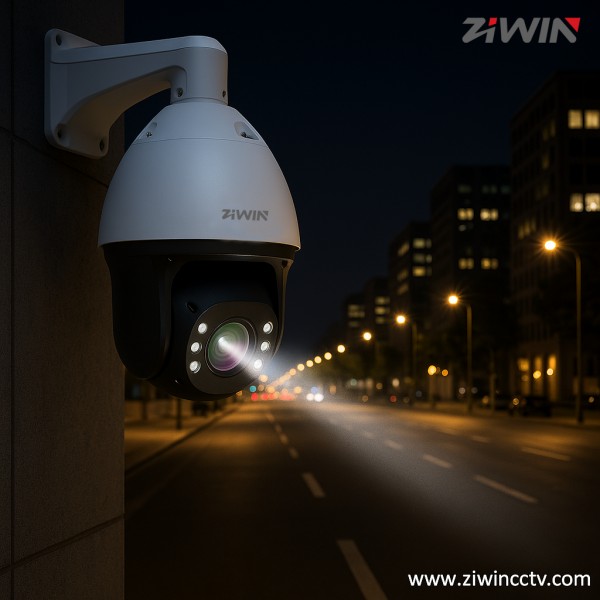
Features: Cost-effective, ideal for short to medium range monitoring (100–300 m).
Applications: Urban streets, industrial parks, residential security.
1.2 Laser Night Vision Camera
Definition: Uses laser beams for long-range, concentrated illumination.
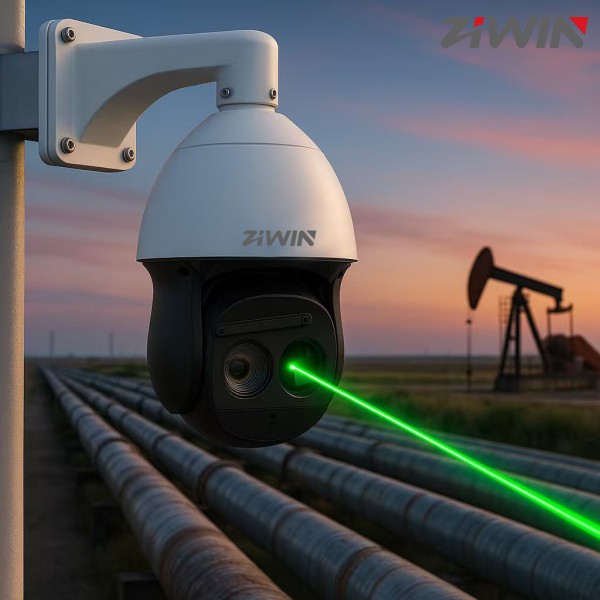
Features: Clear imaging even in fog, haze, or low-light environments. Effective range: 500 m – 1 km.
Applications: Oil & gas pipelines, seaports, border surveillance.
1.3 Thermal Imaging Camera
Definition: Detects heat radiation from objects, independent of visible light.
Features: Works in total darkness, through smoke, fog, or rain. Detection range up to several kilometers.
Applications: Forest fire detection, maritime security, and defense systems.
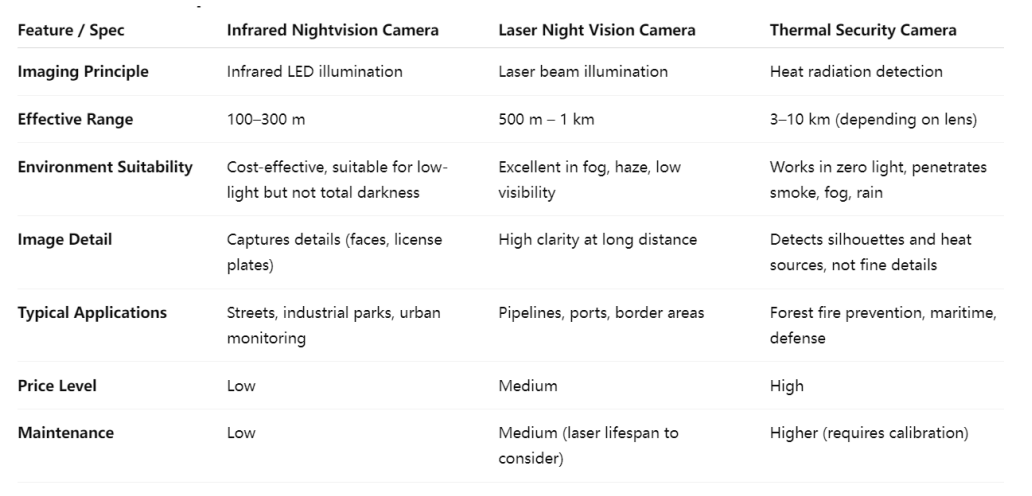
1.4 Infrared vs. Laser vs. Thermal:Battle of Night Vision Technologies
2. Key Challenges for European Customers
1. Regulatory Standards: EU countries strictly regulate laser power and infrared wavelength usage. Products must comply with CE and RoHS certifications.
2. Extreme Climate Conditions: Northern Europe faces severe cold (down to –45°C), while Southern and Western Europe deal with heat, humidity, and salt-fog corrosion in coastal areas.
3. Installation & Infrastructure: Historic city centers often require discreet installations, while remote areas such as pipelines or forests demand long-distance transmission and reliable power supply.
4. Procurement & Compliance Process: European customers typically require multiple testing rounds, certifications, and field validation before procurement. Stability and long-term reliability are critical.
3. How ZIWIN Solves These Problems
European Certification Compliance: ZIWIN cameras are CE and RoHS certified, ensuring compliance with EU regulations on laser safety and infrared standards.
Wide Temperature & Protection Design: ZIWIN PTZ cameras operate reliably between –45°C ~ +60°C (–49°F ~ +140°F), with anti-corrosion housings and salt-fog protection for coastal and maritime environments.
Flexible Installation & Integration: Options include top-mount, side-mount, pole, and mast installation. Supports fiber, PoE, and high-power slip rings for complex sites like cities, pipelines, and offshore facilities.
Long-Term Reliability & Customization: ZIWIN offers sample testing, technical support, and tailored configurations to meet long procurement cycles and demanding European project requirements.
ZIWIN Case Studies in Europe
Pipeline Security: In Romania, ZIWIN laser night vision cameras provided long-range monitoring up to 1 km, ensuring intrusion detection along oil and gas pipelines.
Urban Street Monitoring: ZIWIN infrared night vision camera improved nighttime visibility in Irish city streets and residential communities.
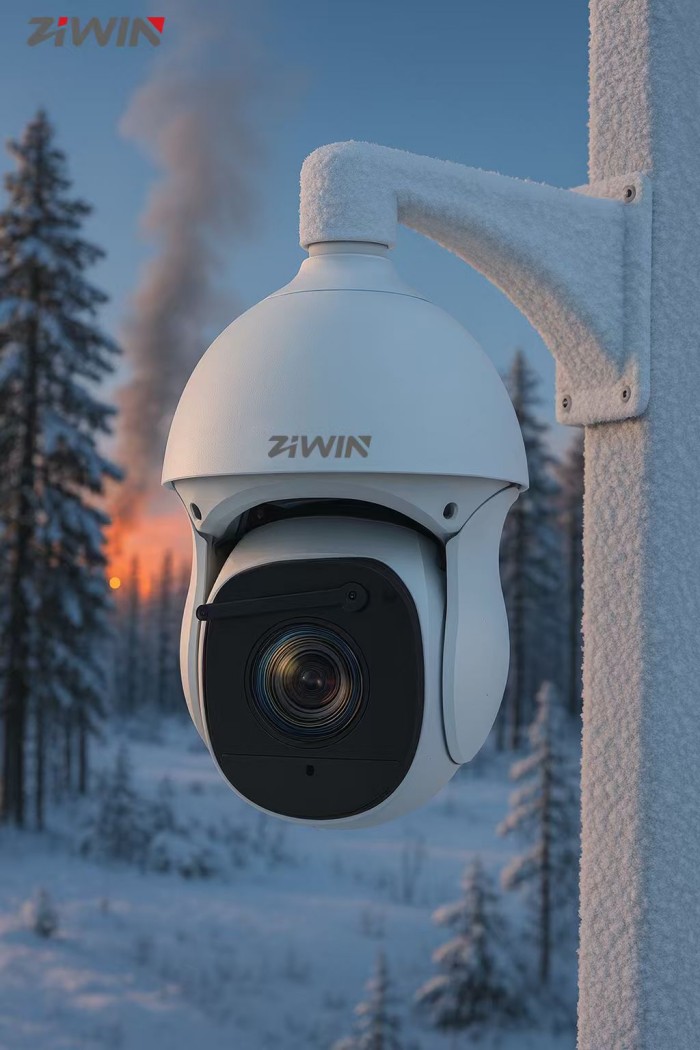
Forest Fire Prevention: ZIWIN thermal security camera enabled 24/7 fire detection and early warning in large forested areas of Finland.
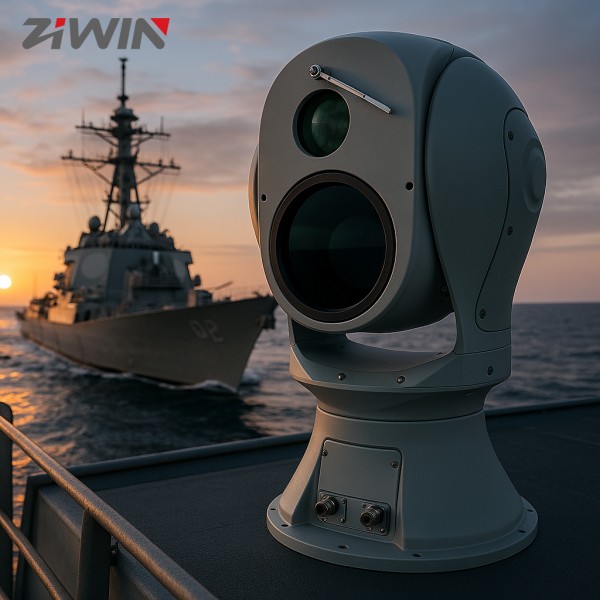
Maritime Defense: ZIWIN best thermal imaging camera secured coastal zones, harbors, and shipping lanes in Spain, even in total darkness and harsh weather.
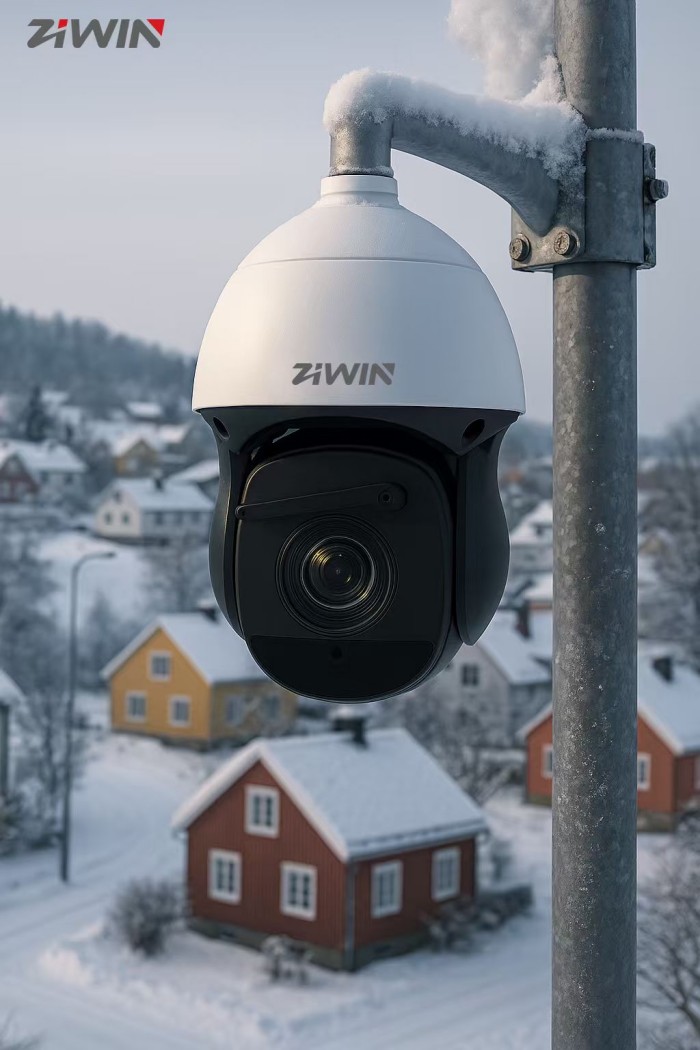
Cold Climate Deployment: In Norway, ZIWIN cameras demonstrated stable operation in -45°C extreme cold
5. FAQ – Europe-Focused
Q1: Are infrared night vision camera effective in European cities?
A1: Yes. They are cost-effective for short-range urban monitoring, especially in areas with street lighting. However, cities may regulate IR illumination intensity, so models must comply with local standards.
Q2: Can laser night vision cameras operate continuously during long European winters?
A2: Yes. They perform well in fog, snow, and long nights. Models with automatic power adjustment and optimized heat dissipation are recommended for continuous operation in Northern Europe.
Q3: Are thermal security camera suitable for forest fire or maritime applications?
A3: Absolutely. Thermal cameras are the best choice for smoke, fog, or zero-light conditions, making them ideal for wildfire detection and maritime safety. They detect heat signatures and silhouettes, but not fine details such as faces or license plates.
Q4: What factors do European customers care about most?
A4: Compliance with CE/RoHS, reliable operation in extreme cold (–45°C) or coastal salt-fog environments, and long-term stability with low maintenance are top priorities.
Q5: For long-range security (e.g., pipelines or ports), which type is best?
A5: For 500 m ~1 km coverage, laser night vision cameras are recommended. For longer distances or zero-light conditions, thermal security cameras are the preferred choice. In some cases, hybrid solutions combine both technologies.
Conclusion
For European projects, the key question is not which technology is best overall, but which camera is best for the specific scenario.
Infrared night vision camera: best for short to medium-range urban monitoring.
Laser night vision cameras: effective for 500 m ~1 km long-range surveillance in low-visibility conditions.
Thermal security camera: the most reliable in total darkness, fog, or extreme weather, with detection ranges up to 6 km.
By considering regulatory compliance, climate conditions, installation complexity, and project lifecycle, decision-makers can choose the right solution.
For expert consultation, sample testing, or tailored European solutions, please visit www.ziwincctv.com or contact sales@ziwincctv.com
 +86-15022658927
  sales@ziwincctv.com
  English
 français
 Deutsch
 Español
 italiano
 русский
 português
 العربية
 tiếng việt
 ไทย
ไทย Türkçe
 Pilipino
 עברי
עברי Afrikaans
 Polska