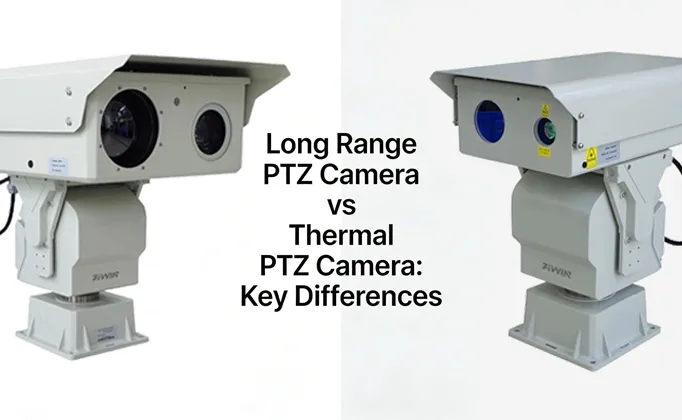
A Long Range PTZ Camera is designed for high-resolution visual monitoring and long-distance identification in daylight or well-lit environments, while a thermal PTZ camera detects heat signatures and performs reliably in darkness, fog, smoke, or other challenging conditions.
Both technologies are widely used in professional surveillance systems. However, they serve different operational purposes. A long distance PTZ camera provides detailed visual evidence and zoom capability for identifying people, vehicles, or objects at long distances, whereas thermal PTZ systems excel at detection when visibility is poor.
In most advanced security infrastructures—such as borders, power plants, ports, and industrial facilities—these technologies are often combined to achieve both long-range detection and high-quality visual verification.
Understanding Long Range PTZ Cameras
A Long Range PTZ Camera is a pan-tilt-zoom surveillance device engineered to capture detailed images of distant targets. It typically uses high-resolution sensors combined with powerful optical zoom lenses to provide clear video over extended distances.
In perimeter security and critical infrastructure monitoring, a long distance PTZ camera allows operators to dynamically scan wide areas and zoom in on potential threats.
Professional long range PTZ solutions commonly include:
High optical zoom (20×–60× or higher)
Long focal length lenses
High-resolution imaging sensors
Real-time pan-tilt control
AI tracking and intelligent detection
Integration with radar or alarm systems
These capabilities allow security teams to identify objects, read vehicle plates, or observe activity across large surveillance zones.
What Is a Thermal PTZ Camera?
A thermal PTZ camera uses infrared sensors to detect heat differences rather than visible light. Instead of producing traditional color or monochrome images, thermal cameras generate heat-based images that highlight temperature variations.
Because thermal imaging does not rely on light, thermal PTZ systems can detect targets in total darkness or through environmental obstacles such as smoke, fog, and dust.
Thermal PTZ cameras are widely used for:
While thermal cameras are excellent at detecting objects at long distances, they typically cannot provide the same level of visual detail as a Long Range PTZ Camera.
Key Differences Between Long Range PTZ Cameras and Thermal PTZ Cameras
Detection Method
The most fundamental difference lies in how each system captures images.
A Long Range PTZ Camera relies on visible light to produce high-resolution images. This makes it ideal for identifying objects, reading license plates, or recognizing faces at long distances.
Thermal PTZ cameras detect heat signatures emitted by objects. They can locate targets even when there is no visible light.
As a result, thermal cameras are often used as early-warning detection tools, while long distance PTZ cameras provide visual confirmation.
Performance in Low-Visibility Conditions
Thermal cameras outperform traditional cameras in environments where visibility is limited.
For example, thermal PTZ systems maintain detection capability in:
Complete darkness
Fog and haze
Smoke or dust
Light rain or snow
A long range PTZ camera, although equipped with night vision or low-light sensors, still depends on ambient light and may struggle in extremely poor visibility conditions.
Image Detail and Identification
When the goal is object identification, the Long Range PTZ Camera has a clear advantage.
High-resolution optical cameras can provide:
Facial recognition potential
License plate identification
Object classification
Color and texture information
Thermal cameras detect heat signatures but typically cannot provide detailed visual information such as clothing color or license plate numbers.
In security operations, this is why long distance PTZ cameras are often deployed alongside thermal sensors.
Detection Distance vs Identification Distance
Thermal cameras often have impressive detection ranges because heat signatures can be identified from far away.
However, detection does not always mean identification.
A thermal system may detect a human presence at long distances, but a Long Range PTZ Camera is typically required to visually confirm the target.
This layered approach—thermal detection followed by long range PTZ verification—is common in high-security surveillance systems.
System Cost and Complexity
Thermal imaging technology is generally more expensive due to specialized sensors.
Thermal PTZ systems typically involve:
A long distance PTZ camera, while still a professional surveillance device, usually has a lower hardware cost compared with thermal imaging solutions.
However, system cost depends heavily on optical zoom level, sensor resolution, and additional features.
How Far Can a Long Distance PTZ Camera See?
The range of a long distance PTZ camera depends on optical zoom capability, sensor resolution, and environmental conditions.
Professional long range PTZ surveillance cameras can achieve:
Human detection at distances exceeding 1 km
Vehicle detection several kilometers away
Optical zoom capabilities of 30× to 60× or higher
High-end systems may also incorporate image stabilization and advanced optics to maintain clarity at extreme distances.
Are Thermal PTZ Cameras Better Than Long Range PTZ Cameras?
Thermal PTZ cameras are better for detecting objects in darkness or low-visibility conditions, while Long Range PTZ Cameras are better for identifying and verifying targets.
Because each technology addresses different surveillance challenges, professional security deployments rarely rely on only one system.
A layered surveillance architecture typically includes:
Thermal detection cameras
Long distance PTZ cameras for visual verification
Fixed cameras for continuous monitoring
This approach improves situational awareness and reduces false alarms.
When Should You Use a Long Range PTZ Camera?
A Long Range PTZ Camera is particularly effective when visual identification is required.
Typical applications include:
Industrial perimeter monitoring
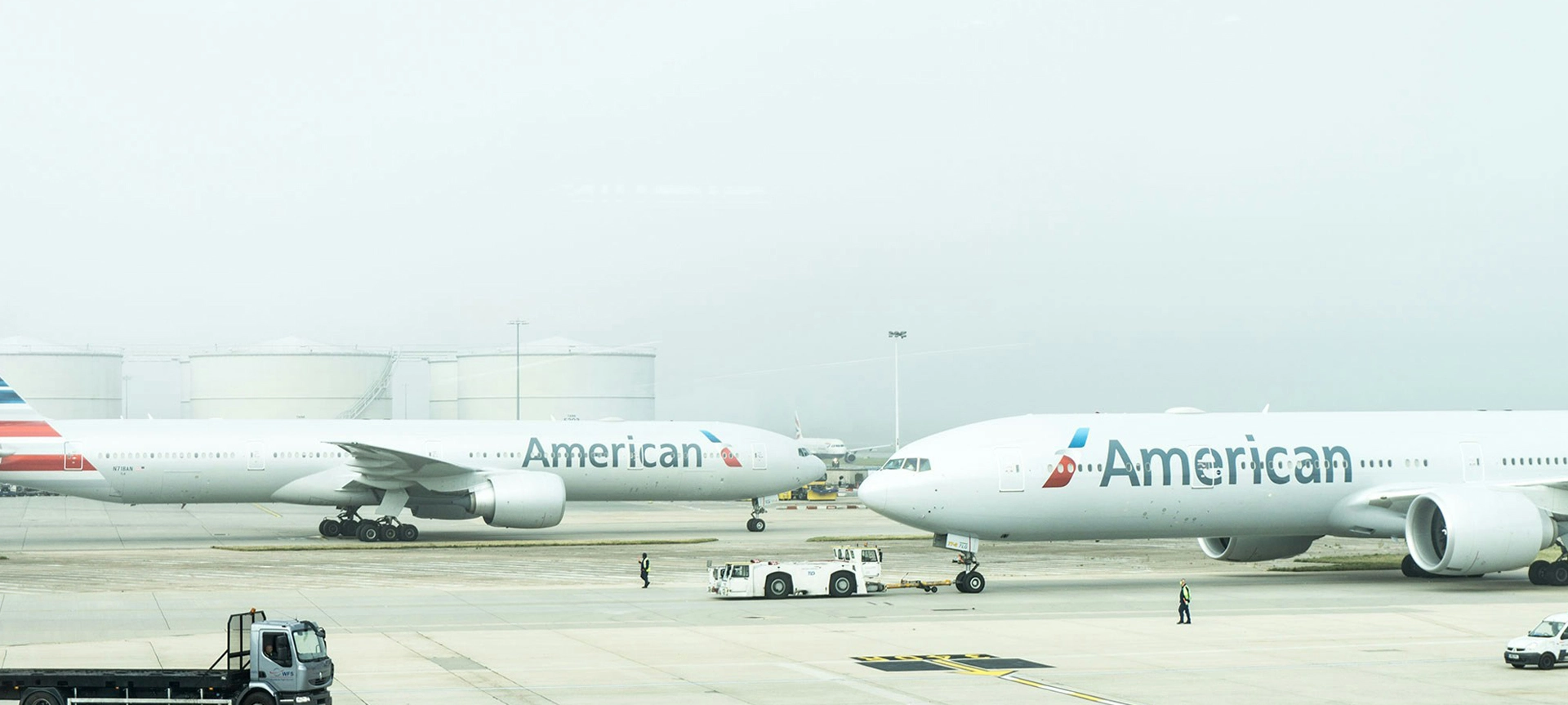
Airport security
Transportation infrastructure
Ports and maritime surveillance
Large commercial complexes
In these scenarios, operators rely on long range PTZ systems to zoom in and observe incidents in detail.
When Is a Thermal PTZ Camera the Better Choice?
Thermal PTZ cameras are most effective in environments where lighting conditions are unreliable.
They are commonly used in:
Thermal technology excels at detecting motion and heat signatures even in challenging weather or nighttime conditions.
Can Long Range PTZ Cameras Work Together With Thermal Cameras?
Yes. Many advanced surveillance systems integrate both technologies into a unified monitoring platform.
A typical configuration works as follows:
Thermal sensors detect movement or heat signatures.
The system automatically directs a Long Range PTZ Camera to the target location.
The long distance PTZ camera zooms in to visually verify the object.
This automated workflow significantly improves threat detection and response speed in large security environments.
Conclusion
Both Long Range PTZ Cameras and thermal PTZ cameras play critical roles in modern surveillance systems. Thermal technology provides reliable detection in darkness and harsh environments, while long distance PTZ cameras deliver the visual detail required for identification and investigation.
For large-scale security infrastructure, the most effective strategy is often to combine both systems. Thermal cameras provide early detection, and long range PTZ cameras supply high-resolution visual confirmation.
By integrating these complementary technologies, organizations can achieve more accurate monitoring, faster threat response, and greater overall security coverage.
Frequently Asked Questions
What is a Long Range PTZ Camera used for?
A Long Range PTZ Camera is used to monitor large areas and identify objects at long distances. It allows operators to pan, tilt, and zoom the camera to inspect activity across wide surveillance zones.
What is the difference between thermal cameras and PTZ cameras?
Thermal cameras detect heat signatures and work effectively in darkness or poor visibility, while PTZ cameras capture high-resolution visual images and allow operators to control viewing direction and zoom.
Can thermal cameras see through fog or smoke?
Thermal cameras perform better than visible-light cameras in fog, smoke, or haze because they detect heat differences rather than relying on reflected light.
Are long distance PTZ cameras suitable for night surveillance?
Yes. Many long distance PTZ cameras include low-light sensors, infrared illumination, or starlight technology, allowing them to operate effectively at night, although thermal cameras still perform better in complete darkness.
Do security systems use both thermal and long range PTZ cameras?
Yes. Many professional surveillance systems combine thermal detection with long range PTZ cameras for detailed visual verification. This combination improves detection accuracy and reduces false alarms.
 +86-15022658927
  sales@ziwincctv.com
  English
 français
 Deutsch
 Español
 italiano
 русский
 português
 العربية
 tiếng việt
 ไทย
ไทย Türkçe
 Pilipino
 עברי
עברי Afrikaans
 Polska