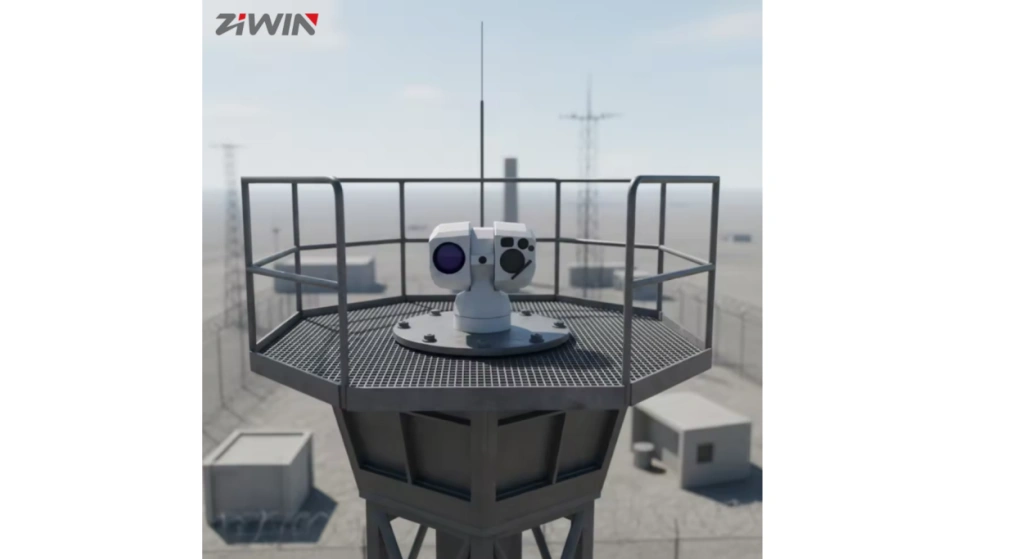
For applications such as border security, coastal monitoring, wildfire detection and high altitude observation, long range surveillance systems require outstanding stability, accuracy and reliability. A common prominent point of discussion for a large number of projects tends to be the engineering specifications of your camera, however, few others will mention the importance of quality pan tilt positioning hardware. In practice, pan tilt performance depends largely on the selection and design of the pan and tilt platform.
This article explains how to choose the proper pan and tilt positioners for long range PTZ camera using an engineering perspective.
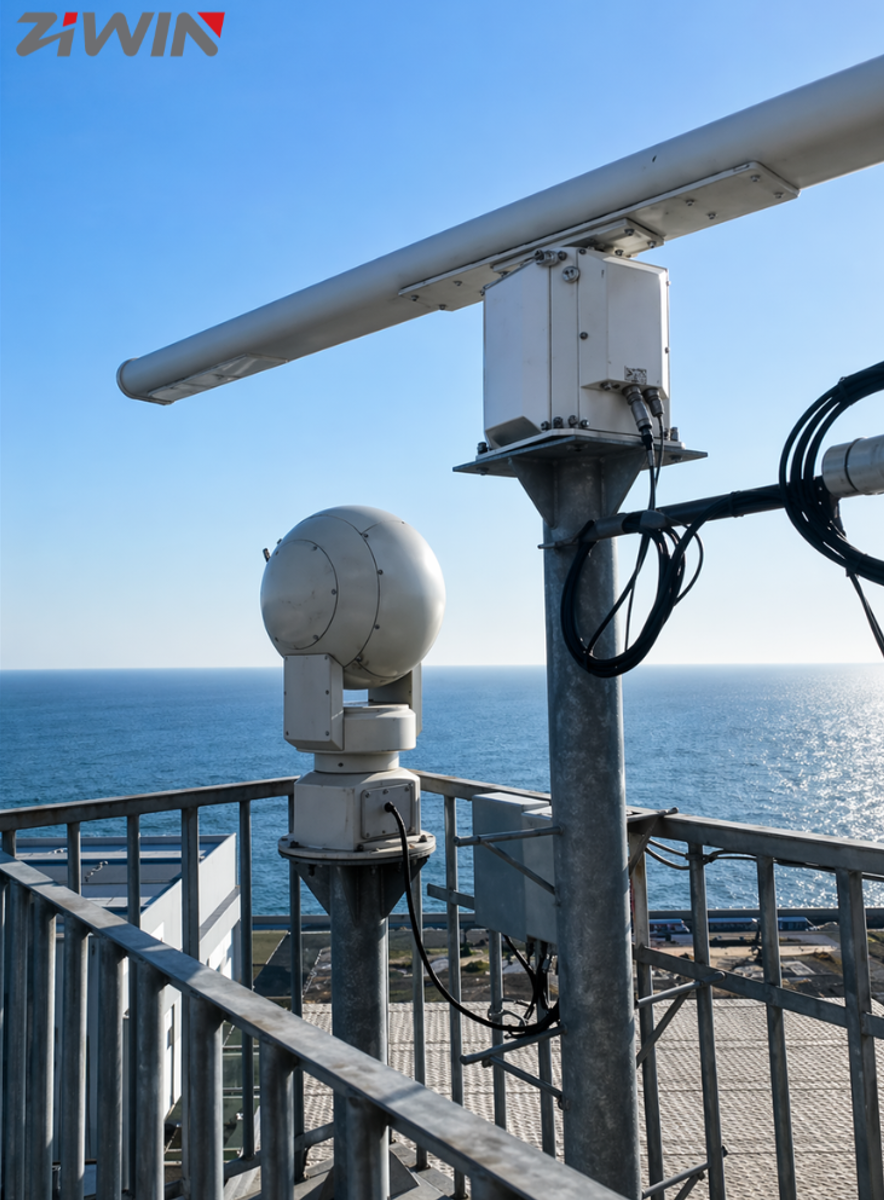
Why does Long Range Surveillance actually need a High-Performance Pan Tilt Positioner?
At close-range (100–300 m), mechanical imperfections may have little consequence. But when people measured distances out to 2 km, or 3 km etc., minor imperfections make big differences:
a. Small vibrations are extreme image shake
b. Slight angular errors can lead to significant targeting offsets
c. Performance under wind load deteriorates by the structural instability
d. Slow rate responds poorly to moving targets.
In simple terms:
The longer the range the higher the demand of accuracy and stability.
Important Aspects to Consider When Selection of Pan Tilt Positioner
1. Payload Capacity
Payload capacity is key yet often overlooked. Here are some additional factors to consider beyond just the weight of the camera:
Long-range zoom lenses
Thermal imaging modules
Laser illuminators
Protective housings
Key recommendation:
So always add a safety margin of 20%–30%. It requires a stouter torsional design to support greater at the higher CG.
2. Accuracy and Repeatability
Long-range surveillance needs accuracy. Typical requirements include:
a. Standard systems: ±0.1° repeatability
b. A pliable sentence pertains to ˗≤0.01° or better for high-end systems
Example:
3 km some meters of deviation can occur directly depending on a 0.1° error, thus target identification depends on the size of it.
3. Speed and Responsiveness
Long-range systems frequently track moving targets, such as cars, boats and drones. Typical speed ranges are:
Pan: 0.01° to 30°/s
Tilt: 0.01° to 15°/s
Note:
A stronger mechanical structure is explicitly required for higher speeds. Vibrational challenge can occur with heavy payloads as well high speed.
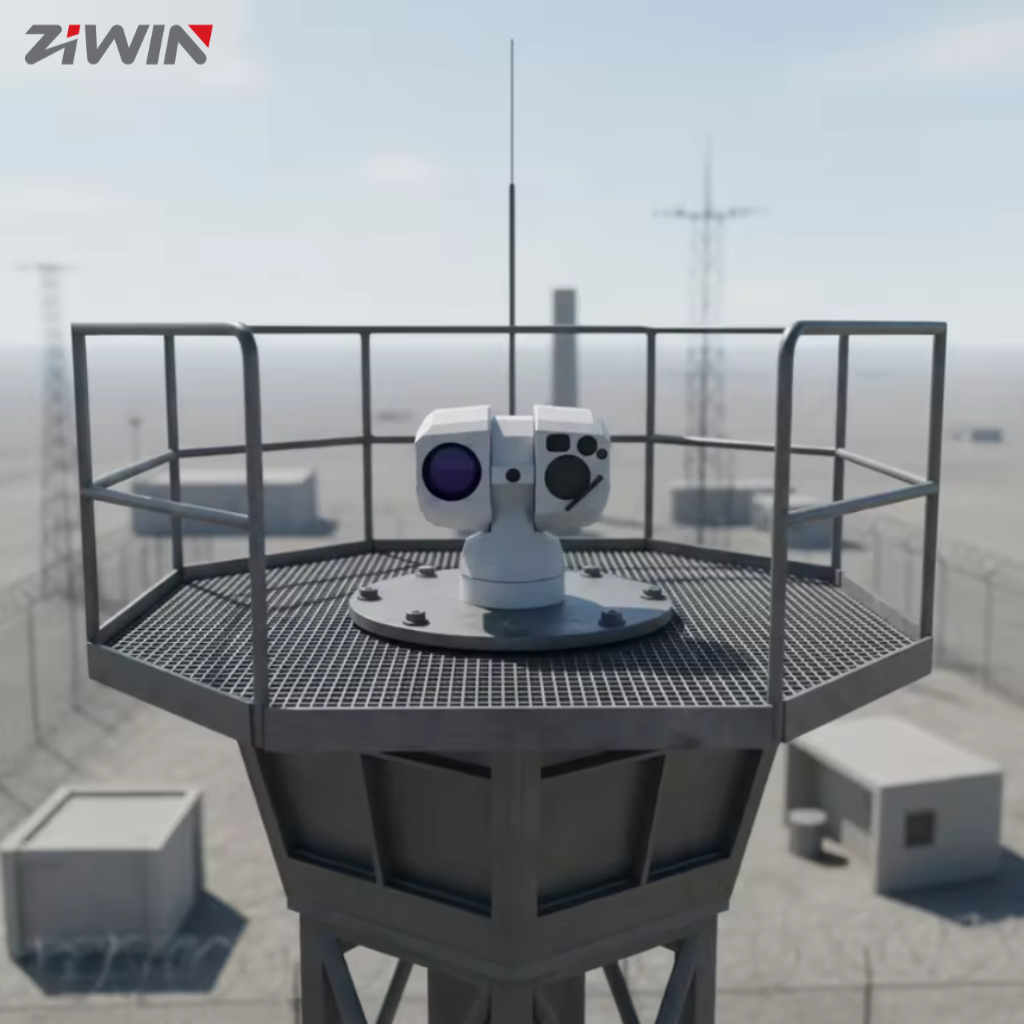
4. Mechanical Structure and Drive Type
Common drive types include:
a. Worm Gear Drive
Advantages: self-locking, cost-effective
Disadvantages: larger backlash, lower precision
b. Harmonic Drive
Advantages: high precision, near-zero backlash
Disadvantages: higher cost
Recommendation:
Low backlash and high rigidity are essential for long range surveillance.
5. Environmental Adaptability
Long range surveillance systems are usually placed outdoor and in extreme conditions. Important considerations include:
a. IP rating (IP66 or above)
b. Wind resistance
c. Salt fog resistance (for marine applications)
d. Operating temperature range
Some of the deployment environments include coasts, mountains, towers and deserts.
Do You Need a Slip Ring?
An equally important and often-neglected determinant.
With Slip Ring
Advantages:
a. Enables 360° continuous rotation
b. Best choice for constant or continuous scanning applications
c. Provide for transmission of power, Ethernet, control signals and RF signals (for antenna systems)
Without Slip Ring
Advantages:
a.Lower cost
b.Higher reliability
c.Limitations:
d.Rotation is usually up to 0° to 355°.
Recommendation:
If the system is not required to follow a moving target, slip rings can be avoided.
Integration of Signals and Control over a System
In general, long-range surveillance system comprises a nurturing of several segments. Common interfaces include:
RS422 / RS485 (Pelco D/P)
Ethernet (TCP/IP control)
Outputs by Video (IP or HD-SDI)
Key considerations:
— Who is in control of the pan tilt positioner (camera, controller or remote system)
—Do we require real-time feedback about our location?
– Is command control at a high frequency, say 10–20 Hz?
Common Mistakes in Selection
Most of rotational failures come from wrong choices:
Load miscalculated based only on payload and not center of gravity
Not accounting for wind load and vibration effects
Treating slip ring requirements as an afterthough results in twisting cables
Long-distance identification with low accuracy
Conclusion
For long-range surveillance applications, a pan tilt positioner is far more than just a mounting device—it is a critical component that directly determines overall system performance. When selecting the right solution, it is essential to carefully consider factors such as payload and center of gravity, accuracy and stability, speed and responsiveness, environmental conditions, as well as signal integration and control requirements. A properly designed pan and tilt positioner can significantly enhance detection range, improve tracking capability, and ensure long-term system reliability.
 +86-15022658927
  sales@ziwincctv.com
  English
 français
 Deutsch
 Español
 italiano
 русский
 português
 العربية
 tiếng việt
 ไทย
ไทย Türkçe
 Pilipino
 עברי
עברי Afrikaans
 Polska