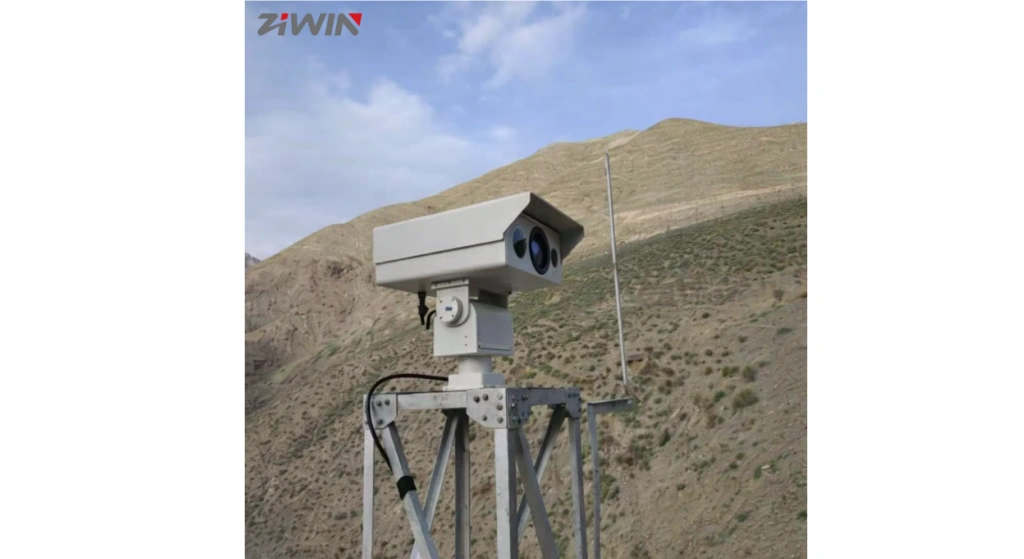
Modern security and surveillance systems face some unique challenges when implemented in border areas, shores and mountainous terrain. Such environments tend to have huge areas of coverage, treacherous or unpredictable weather and moving targets — emphasizing the need for a proper combination of long-distance PTZ camera systems and pan tilt positioner solutions.
The objective of this guide is to help you find the best solution among a combination of Long Range PTZ Cameras, pan tilt positioner, pan-tilt antenna positioner systems.
Application Scenarios and Requirements
Border Surveillance
Border security necessitates near-constant surveillance over miles of terrain often without much installed infrastructure.
Key requirements:
—Long-Range Detection Mid (2 km to 10+ km)
Monitoring day and night
Intrusion detection and tracking
– Rolling integration into radar or perimeter systems
Typical solution:
Any long-range PTZ camera with optical zoom (60x–80x)
– Heat Imager For Night Use
Pan-Tilt positioner for Tracking with high precision
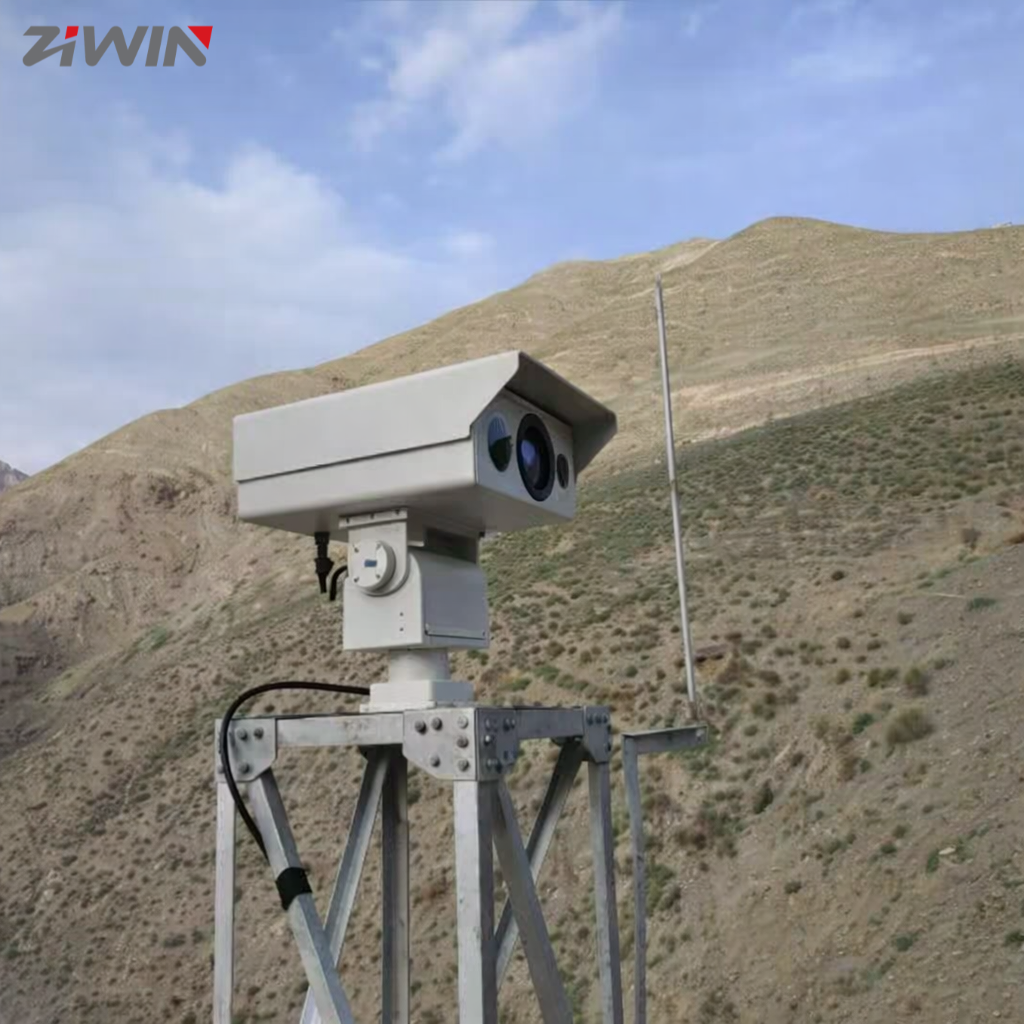
Coastal Surveillance
Coastal environments can be challenging with salt fog, high humidity and strong winds requiring vessels to be quickly identified at long distances.
Key requirements:
Corrosion-resistant design
– Vessels Detection in Long Range (3 km – 15 km)
— Operate in high wind conditions without instability.
Recommended setup:
Marine-grade pan-tilt positioner (antirust coating or stainless steel)
Thermal camera integrated with long-range PTZ
— Bureau of Aeronautics optional pan-tilt antenna positioner for the radar or communication system
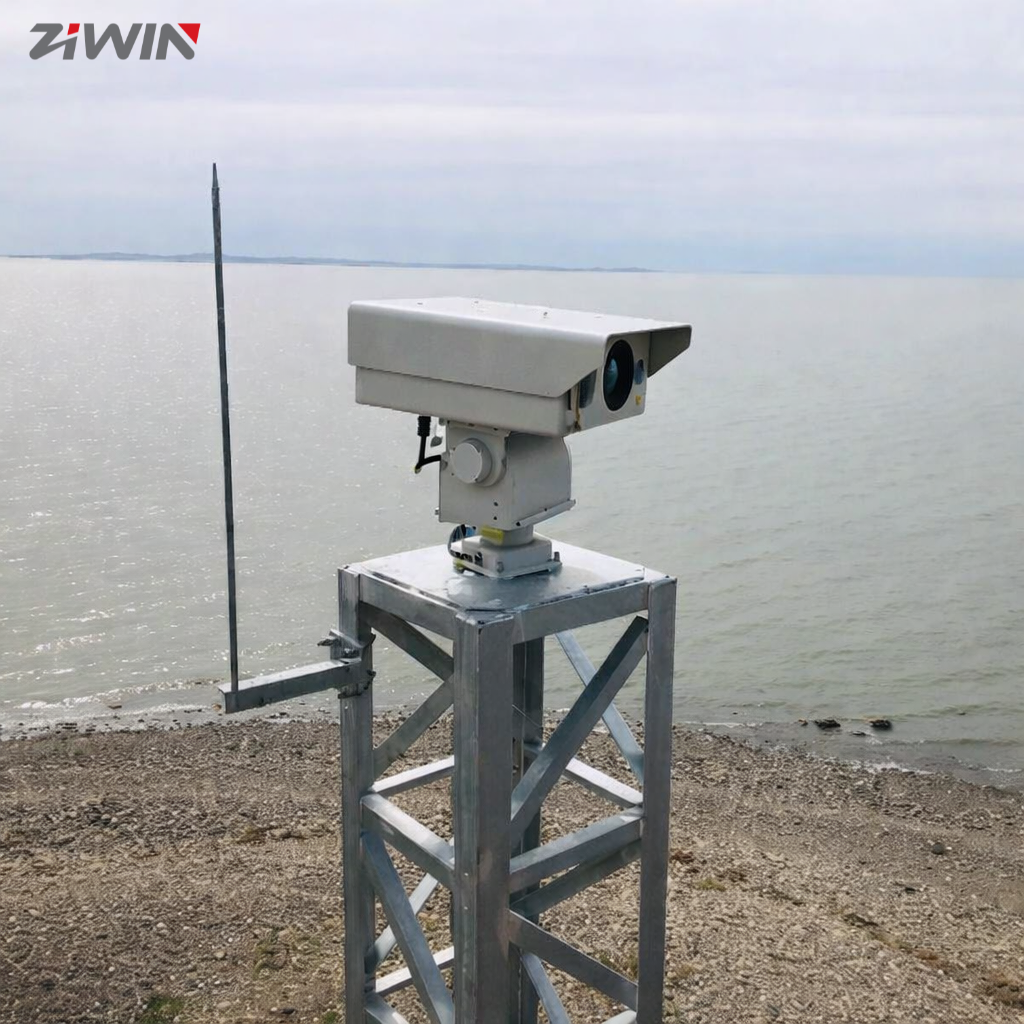
Mountain Surveillance
Forest fire detection, border monitoring and high-altitude reconnaissance in mountainous regions are some of the areas where they are routinely deployed.
Key challenges:
— Vibration caused by wind and unsteady mounting surfaces
Fog, rain, and heat haze
Older topics include complex terrain and moving targets.
Recommended solution:
High-stability pan-tilt positioner
Thermal imaging for fire and smoke detection
Long-range PTZ camera for identification during day
Core System Components
Pan tilt positioner (Core stability module)
Any long-range surveillance system is built on the pan-tilt positioner.
Key features:
360° continuous Panning (with slip ring)
This includes:− High positioning precision (e.g., 0.1° or 0.01°.)
High load capacity so that it can hold multiple sensors
Adjustable motion is important for long-range imaging
At long range, stability and accuracy become more important than zoom ratio.
Long Range PTZ Camera (Visible Imaging)
Long-range PTZ allows for high-resolution daytime monitoring.
Typical configurations:
40× / 60× / 80× + optical zoom
Premium long-distance clarity lenses
Reference performance:
Vehicle recognition is possible at a distance of 2 km and would require at least around 60x zoom.
70x+ zoom with premium optics is needed at 5 km
Thermal Camera (Night & Harsh Conditions)
In scenarios with limited visibility such as night surveillance, night vision thermal camera has no substitute.
Common focal lengths:
50 mm / 75 mm / 100 mm / 150 m
Capabilities:
Thermals, which function primarily at night, out perform visible cameras during the same period.
Stabilization & Anti-Vibration
In elevated installations—think towers, mountains or coasts—stabilization is vital.
Technologies include:
Electronic Image Stabilization (EIS)
Gyro stabilization
Mechanical anti-vibration designs
System Integration — Pan Tilt Antenna Positioner
PTZ cameras are usually complemented by a pan-tilt antenna positioner in more advanced systems.
Applications:
These systems provide Slew-to-Cue capability, which is when the PTZ follows a target that was detected by radar.
Recommended Configurations by Distance
Important note:
Day and night performance are wildly different:
To capture visuals what we call 'daytime' exists mainly on visible zoom cameras
Algorithm: Nighttime with thermal imaging
System Integration Trends
Surveillance systems recently have become much more advanced and instead of isolated devices, we see them in advanced, integrated platforms:
PTZ Radar tracks it and it can Slew-to-Cue
Multi-site deployments are governed by centralised control centres.
AI helps in detecting people, vehicles and fire cross-detected followed by remote controllable via TCP/IP networks. Such integration is now customary in border and coastal security projects.
Common Mistakes to Avoid
❌ Comparing only the zoom level (e.g. 80x vs 60x)
✔ Always go for lens quality and pan-tilt steadiness
❌ Overlooking environmental factors
✔ Effects of wind, heat haze and humidity that affect performance
Hazards on a self-driving car
❌ Detection with traditional cameras at night
✔ Use thermal imagery as part and parcel
Conclusion
When considering a PTZ camera system for long-distance border, coastal and mountain surveillance, please ensure you take a system level view. Critical factors include:
− Resistance against environmental adversities like wind, salt and temperature
—Supported radar and antenna systems.
Final takeaway:
Long-range surveillance is not all about visual distance—it needs to be crystal clear, with clarity and precision.
 +86-15022658927
  sales@ziwincctv.com
  English
 français
 Deutsch
 Español
 italiano
 русский
 português
 العربية
 tiếng việt
 ไทย
ไทย Türkçe
 Pilipino
 עברי
עברי Afrikaans
 Polska