As security threats become more complex and surveillance requirements expand across military, maritime, border protection, and critical infrastructure sectors, conventional visible-light cameras are often no longer sufficient. Organizations increasingly rely on EO/IR cameras to achieve reliable detection, recognition, and tracking capabilities in both daytime and nighttime conditions.
An EO/IR camera combines electro-optical imaging and infrared thermal imaging into a single surveillance system. By integrating multiple sensors, these advanced cameras provide continuous situational awareness regardless of lighting, weather, or environmental challenges.
In this guide, we explain what an EO/IR camera is, how it works, its key advantages, and where EO/IR systems are commonly used.
What Is an EO/IR Camera?
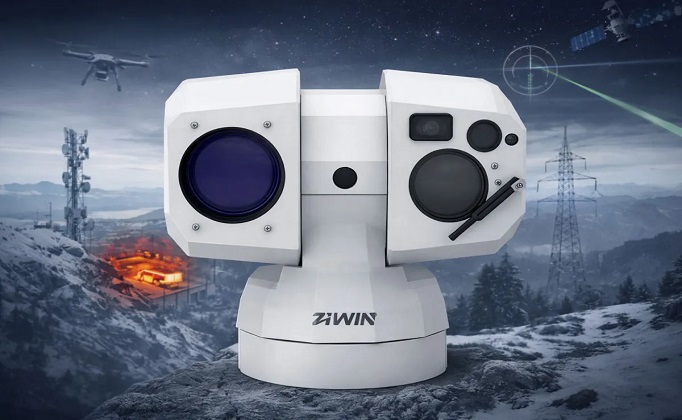
An EO/IR camera (Electro-Optical Infrared Camera) is a multi-sensor imaging system that combines:
Electro-Optical (EO) Camera
Infrared (IR) Thermal Camera
Pan-Tilt-Zoom (PTZ) Platform (optional)
Laser Range Finder (optional)
AI Video Analytics (optional)
The EO sensor captures high-resolution visible-light images similar to a traditional surveillance camera. The infrared sensor detects thermal radiation emitted by objects, allowing operators to identify targets even in complete darkness, fog, smoke, haze, or camouflage conditions.
By fusing these technologies, an EO/IR camera delivers superior surveillance performance across a wide range of environments.
Key Components of an EO/IR Camera
| Component | Function |
|---|
| EO Camera | Captures visible-spectrum images during daylight |
| Thermal Camera | Detects heat signatures in day and night conditions |
| PTZ Mechanism | Enables 360° monitoring and target tracking |
| Laser Range Finder | Measures target distance accurately |
| Video Analytics | Supports intelligent detection and tracking |
How Does an Electro Optical Infrared Camera Work?
An electro optical infrared camera operates by simultaneously utilizing two different imaging technologies.
Electro-Optical Imaging
The electro-optical sensor captures reflected visible light, producing high-definition color images with excellent detail. It is ideal for:
Infrared Thermal Imaging
The infrared sensor detects thermal energy emitted by objects rather than relying on visible light.
This allows operators to:
Detect intruders at night
Locate vehicles in darkness
Identify hidden personnel
Monitor equipment overheating
Observe targets through light fog or smoke
Sensor Fusion
Modern EO/IR systems can display EO and thermal imagery separately or combine them into a fused image. This improves target detection and decision-making while reducing false alarms.
What Is an EO IR PTZ Camera?
An EO IR PTZ camera is an EO/IR surveillance system mounted on a motorized pan-tilt-zoom platform.
PTZ functionality allows operators to:
EO IR PTZ cameras are commonly deployed for long-range surveillance applications where a fixed camera cannot provide sufficient coverage.
Benefits of EO IR PTZ Cameras
Wide-area monitoring
Long-range target detection
Automatic tracking capabilities
Reduced number of cameras required
Enhanced operational efficiency
Many advanced systems can detect human targets several kilometers away and identify vehicles at even greater distances.
Main Advantages of EO/IR Cameras
24/7 Surveillance Capability
Traditional cameras depend on ambient light. EO/IR cameras maintain visibility around the clock using thermal imaging technology.
Long-Range Detection
High-performance EO/IR cameras can detect targets over several kilometers, making them suitable for border security, coastal surveillance, and military operations.
All-Weather Monitoring
EO/IR systems continue operating effectively during:
Improved Threat Detection
Thermal sensors can reveal hidden or camouflaged targets that may be invisible to conventional cameras.
Lower False Alarm Rates
Combining visible and thermal imaging improves detection accuracy and reduces nuisance alarms.
Where Are EO/IR Cameras Used?
EO/IR cameras are widely used across government, military, industrial, and commercial sectors.
Border Surveillance
Border security agencies use EO/IR camera systems to monitor large areas and detect unauthorized crossings.
Border patrol
Perimeter intrusion detection
Remote surveillance towers
National security monitoring
Thermal imaging enables reliable target detection regardless of time or weather conditions.
Maritime Surveillance
Maritime environments present unique visibility challenges.
EO/IR cameras help monitor:
Thermal imaging can identify vessels and people over water even in darkness or poor weather.
Military and Defense Operations
Military organizations rely heavily on EO/IR technology for:
Critical Infrastructure Protection
Critical facilities require continuous monitoring to prevent unauthorized access and security threats.
Industrial Security
Large industrial facilities often cover vast areas that are difficult to secure with conventional CCTV systems.
Warehouses
Manufacturing facilities
Mining operations
Renewable energy farms
Logistics centers
Search and Rescue Operations
Search and rescue teams use thermal EO/IR cameras to locate individuals in challenging environments.
Mountain rescue
Maritime rescue
Disaster response
Firefighting support
Missing person searches
EO/IR Camera vs Traditional CCTV Camera
| Feature | Traditional CCTV | EO/IR Camera |
|---|
| Daytime Monitoring | Yes | Yes |
| Night Vision | Limited | Excellent |
| Thermal Detection | No | Yes |
| Long-Range Surveillance | Limited | Excellent |
| Fog and Smoke Penetration | Poor | Better |
| Target Tracking | Limited | Advanced |
| Military Applications | Rare | Common |
Choosing the Right EO/IR Camera
Detection Range: Evaluate detection, recognition, and identification requirements.
Thermal Resolution: Higher thermal resolution provides better image quality.
PTZ Performance: Choose a reliable EO IR PTZ camera for wide-area surveillance.
Environmental Protection: Ensure resistance to rain, dust, salt spray, and extreme temperatures.
System Integration: Support for VMS, radar systems, AI analytics, and command centers.
Why Modern Security Systems Are Adopting EO/IR Cameras
The growing demand for intelligent surveillance has accelerated adoption of EO/IR technology worldwide.
Greater detection accuracy
Longer operational range
Enhanced nighttime visibility
Improved situational awareness
Reduced security risks
As threats become increasingly sophisticated, organizations require surveillance solutions capable of operating under all environmental conditions.
EO/IR Surveillance Solutions from ZIWIN
ZIWIN provides advanced EO/IR camera systems designed for long-range surveillance, perimeter protection, border security, maritime monitoring, and critical infrastructure applications.
Our EO IR PTZ cameras integrate high-definition electro-optical sensors, thermal imaging technology, intelligent tracking, and ruggedized construction to deliver reliable performance in demanding environments.
Frequently Asked Questions (FAQ)
What does EO/IR stand for?
EO/IR stands for Electro-Optical/Infrared. It combines visible-light imaging and thermal imaging technologies in a single surveillance system.
Can EO/IR cameras see in complete darkness?
Yes. Infrared thermal sensors detect heat signatures rather than visible light, allowing operation in total darkness.
What is the difference between an EO/IR camera and a thermal camera?
A thermal camera only provides thermal imaging, while an EO/IR camera combines both visible-light and thermal sensors for enhanced situational awareness.
What industries use EO/IR cameras?
EO/IR cameras are widely used in defense, border security, maritime surveillance, critical infrastructure protection, industrial security, and search-and-rescue operations.
 +86-15022658927
  sales@ziwincctv.com
  English
 français
 Deutsch
 Español
 italiano
 русский
 português
 العربية
 tiếng việt
 ไทย
ไทย Türkçe
 Pilipino
 עברי
עברי Afrikaans
 Polska