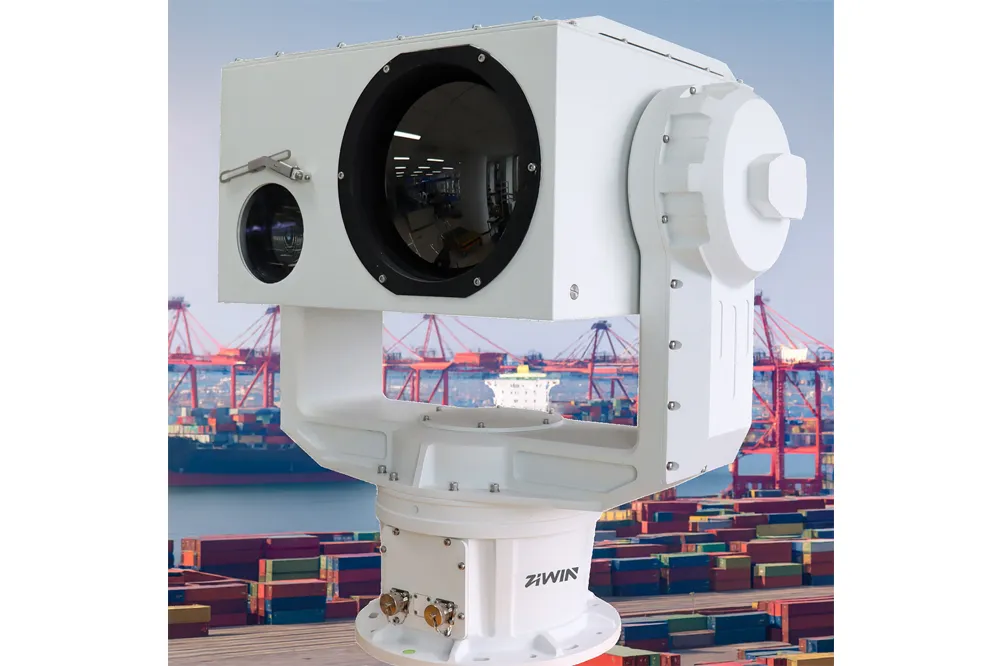
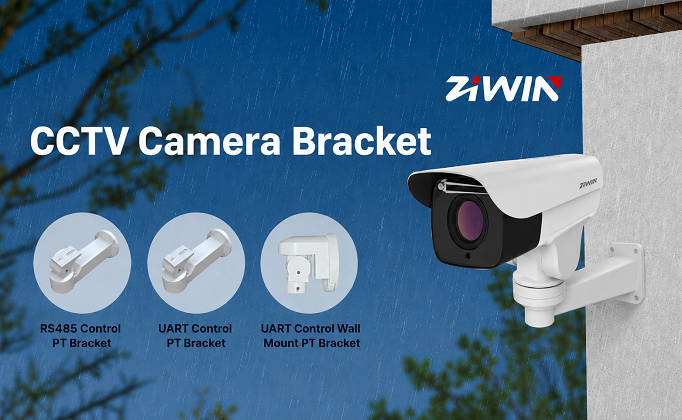
In long-range surveillance, border protection, perimeter security, and EO/IR imaging systems, the pan tilt unit (PTU) is one of the most critical components. While lenses, sensors, and thermal cameras often receive more attention, it is the camera pan tilt unit that determines whether a system can maintain high-precision tracking, survive extreme weather, and deliver stable images over long operational cycles.
This article explains what a pan tilt unit is, how it works, where it is used, and how to choose the right model for professional surveillance applications.
What Is a Pan Tilt Unit?
A pan tilt unit is a dual-axis motorized mechanism that rotates a camera or multi-sensor payload horizontally (pan) and vertically (tilt). It enables wide-area coverage, long-range tracking, automated scanning, and rapid repositioning.
A professional PTU provides:
Smooth, controlled rotation
High torque for lifting heavy payloads
Precise angular positioning (0.01°–0.1°)
Stability under wind, vibration, or shock
Remote or automated control through Ethernet, RS485, ONVIF, or custom protocols
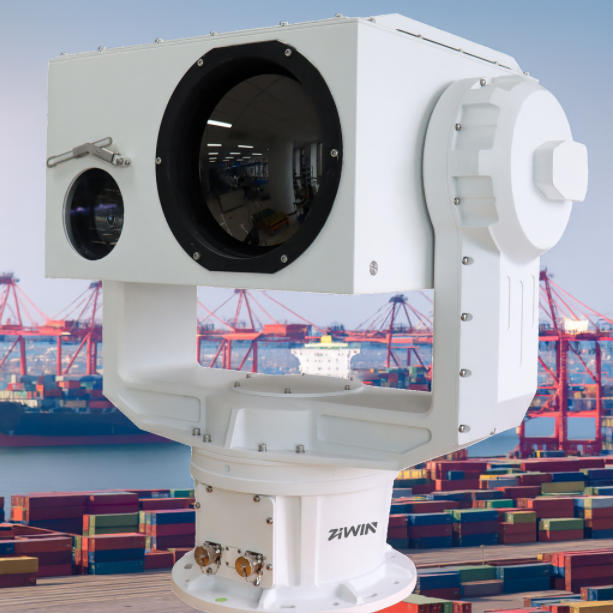
What Is a Camera Pan Tilt Unit?
A camera pan tilt unit is specifically designed for visible-light cameras, thermal sensors, zoom modules, or combined EO/IR multi-sensor payloads.
Compared to consumer PTZ cameras, a professional PTU offers:
Payload capacity of 3–200 kg
Torque or servo motors instead of small stepper motors
Much higher positioning accuracy
IP66–IP68 environmental protection
Full custom integration capability
How a Pan Tilt Unit Works: Internal Mechanisms
Direct-Drive Torque Motor
High-end PTUs use brushless direct-drive motors, offering fast rotation, zero backlash, high precision, and extremely long service life.
Gear-Drive or Worm-Gear Mechanisms
Common in medium-duty PTUs. They provide good self-locking, stable motion, and cost-effective performance.
Encoder System
Encoders provide precise feedback, enabling accurate presets, repeatable scanning, and closed-loop control.
Control Electronics
Modern PTUs support RS485, CAN bus, Ethernet IP, and offer SDKs for system-level integration.
Environmental Protection
Professional PTUs withstand rain, snow, high winds, desert heat, and corrosive coastal environments.
Key Performance Metrics
Payload Capacity — typically 3–200 kg depending on model.
Pan & Tilt Speed — important for UAV tracking and fast scanning.
Positioning Accuracy — essential for long-range zoom imaging.
Torque Output — allows the PTU to resist wind and inertia.
Stabilization Performance — reduces vibration and image jitter.
Applications of Professional PTUs
Border and coastline surveillance
Oil & gas field monitoring
Airport and seaport perimeter security
Smart city and infrastructure protection
Defense and military EO/IR systems
Telecom tower inspection and monitoring
Pan Tilt Unit vs. Pan Tilt Positioner
Although often used interchangeably, a pan tilt unit usually refers to the full dual-axis mechanism including motors, encoders, and control electronics, whereas a pan tilt positioner is more of an engineering term focused on the mechanical/rotational platform itself.
How to Choose the Right PTU
Important selection criteria include:
Payload and center of gravity
Required rotation speed
Precision requirements (0.01° / 0.02° / 0.1°)
Environmental temperature and IP rating
Communication protocol compatibility
Duty cycle and application type
Why Professional Systems Use PTUs Instead of PTZ Cameras
A PTU delivers far greater torque, stability, precision, and multi-sensor support. PTZ cameras are not suitable for long-range EO/IR, heavy payloads, or harsh environments.
Conclusion
A pan tilt unit is the foundation of modern long-range surveillance and EO/IR systems. It ensures stable tracking, accurate positioning, and reliable 24/7 outdoor performance, even under extreme conditions.
Learn More
ZIWIN provides a full range of professional pan tilt units with customizable precision and torque motor design.
Product link: https://www.ziwincctv.com/products/pan-tilt-unit-positioner/
 +86-15022658927
  sales@ziwincctv.com
  English
 français
 Deutsch
 Español
 italiano
 русский
 português
 العربية
 tiếng việt
 ไทย
ไทย Türkçe
 Pilipino
 עברי
עברי Afrikaans
 Polska