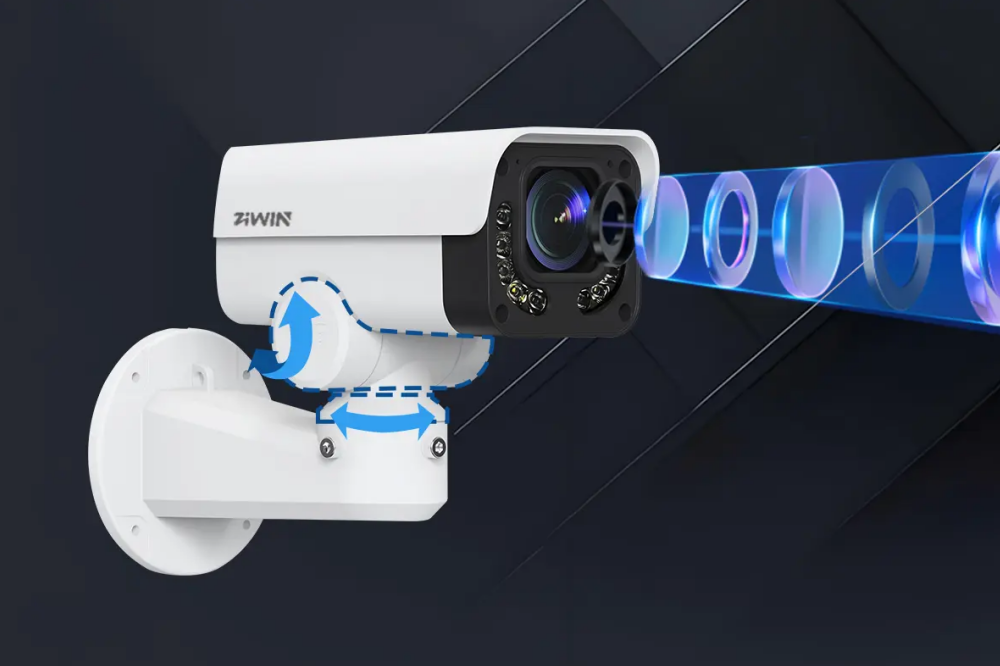
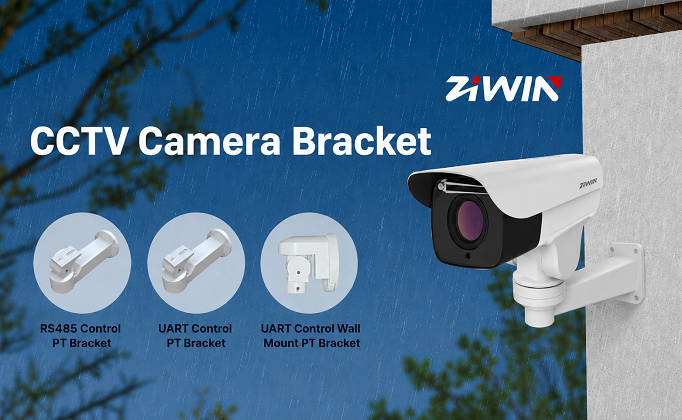
In 2025, PTZ cameras have become a core asset in modern security and video-production systems. As surveillance requirements expand across city infrastructure, industrial environments, logistics hubs and transportation networks, distributors and system integrators need a sophisticated understanding of how to identify a reliable PTZ camera manufacturer, how PTZ compares to multi-head cameras, and which PTZ types best support professional deployments.
Industry research confirms the growing importance of PTZ technology. According to MarketsandMarkets, the global video surveillance market is expected to reach USD 83.3 billion by 2028, driven by advanced monitoring demands and widespread adoption of intelligent PTZ systems.
(Source: https://www.marketsandmarkets.com/Market-Reports/video-surveillance-market-645.html)
This rapid expansion underscores why choosing the right manufacturer and PTZ platform is more critical than ever for global integrators and distributors.
Why PTZ Cameras Matter in Today's Security Landscape
PTZ cameras have evolved far beyond traditional pan-tilt-zoom mechanics. Today's PTZ systems offer intelligent tracking, high-sensitivity imaging, long-range optical zoom, and seamless integration with modern network infrastructures. Their ability to dynamically monitor large or complex areas makes them indispensable for high-tier security projects.
For professional stakeholders—distributors, engineering contractors, and system integrators—the most valued aspects include:
Advanced image processing (WDR, low-light algorithms, ISP tuning)
Long-range zoom performance for detail recognition
Reliable control protocols (ONVIF, RTSP, IP control, joystick support)
High-precision mechanical durability
Compatibility with global VMS platforms
Stable supply chain and long-term firmware support
The increasing number of global deployments validates their importance. The Security Industry Association (SIA) forecasts that by 2025, worldwide camera installations will exceed one billion units, with PTZ systems expanding rapidly due to their long-range tracking capabilities and flexible coverage.
(Source: https://www.securityindustry.org/report/megatrends/)
What Defines a High-Caliber PTZ Camera Manufacturer
A professional ptz camera manufacturer must demonstrate more than basic assembly capabilities. Integrators and distributors look for engineering depth, product stability, and long-term support. Key factors include:
1. Optical & Mechanical Engineering Strength
Top-tier manufacturers demonstrate excellence in:
Professional zoom modules (20x/30x/40x+)
High-speed autofocus
Accurate PTZ motor positioning
Reinforced internal structures for continuous 24/7 rotation
Weatherproofing and heat dissipation design for outdoor units
Mechanical precision directly affects camera stability, lifetime, and tracking accuracy.
2. Advanced Imaging Performance
High-quality imaging is essential in environments with inconsistent lighting. Critical attributes include:
True WDR for backlit or high-contrast scenes
Low-light performance using BSI sensors and IR optimization
3D digital noise reduction for nighttime clarity
Intelligent exposure and color management
Distributors seek manufacturers with consistent ISP tuning capabilities to ensure uniform quality across product lines.
3. Comprehensive Connectivity Options
PTZ cameras serve many vertical markets, each requiring different transmission formats. A robust manufacturer offers:
IP streaming via RTSP/RTMP/SRT
PoE for simplified installation
NDI for live-production workflows
SDI/HDMI for broadcast environments
Fiber or long-distance Ethernet options for industrial zones
This versatility ensures that integrators can implement PTZ solutions in hybrid systems without compatibility issues.
4. Multi-Protocol Camera Control
Professional-grade PTZ systems should support:
ONVIF Profile S/G
Web UI, CMS, and remote management
RS485 joystick control
Preset patrol routes
Auto-cruise and AI auto-tracking
Consistent control performance across software and hardware environments is crucial for large-scale deployments.
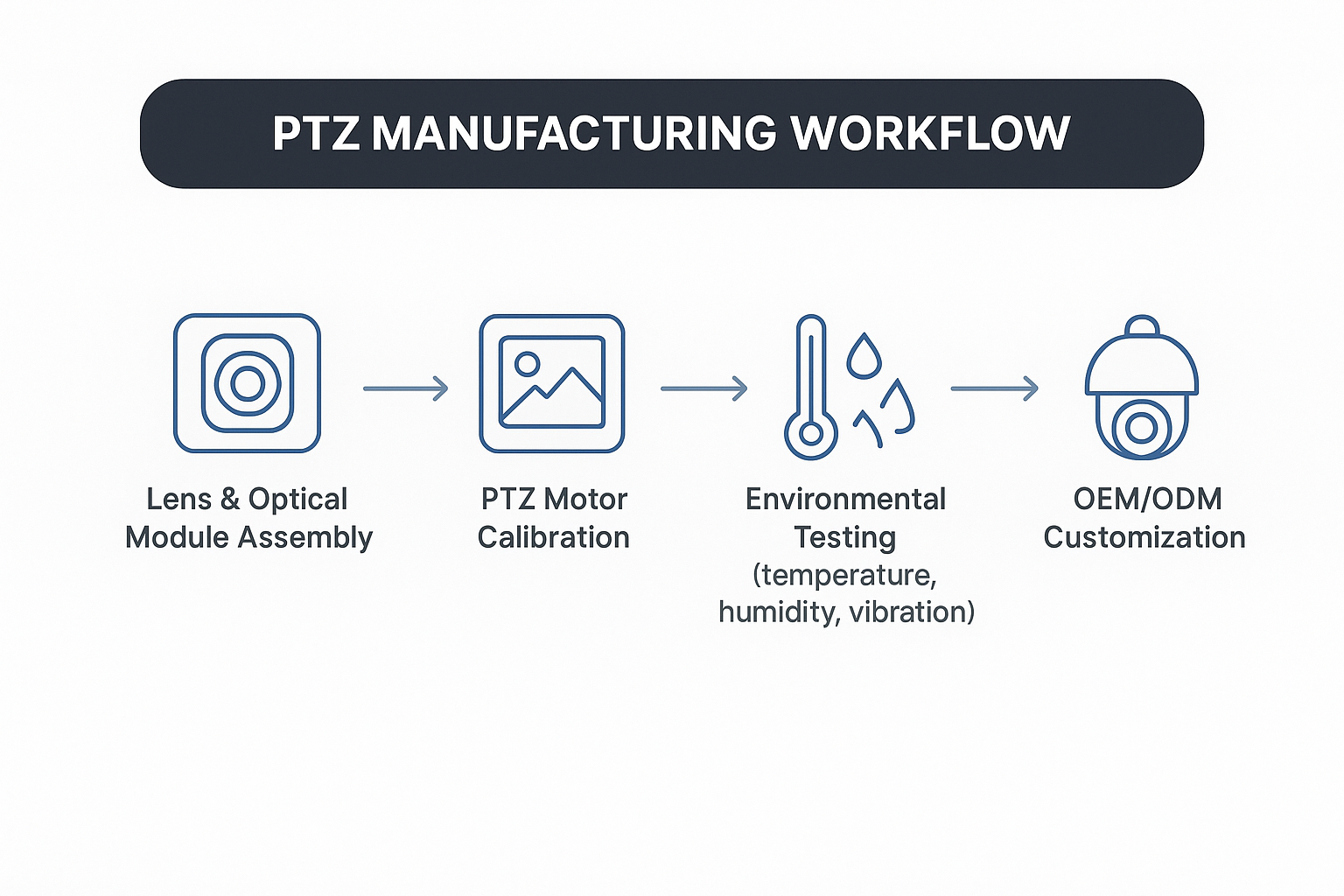
5. Manufacturing Reliability & OEM/ODM Capabilities
Professional buyers value manufacturers who offer:
ISO-certified production processes
CE/FCC/NDAA-compliant products
Long-term firmware support
Flexible OEM/ODM customization
Stable supply chain management
A dependable manufacturer ensures consistent quality, rapid delivery, and competitive advantages for distributors.
PTZ Cameras vs Multi-Head CCTV Cameras: Which Is Better?
A common question among system integrators is whether PTZ cameras outperform multi-head (multi-sensor) CCTV systems. The answer depends on the deployment needs.
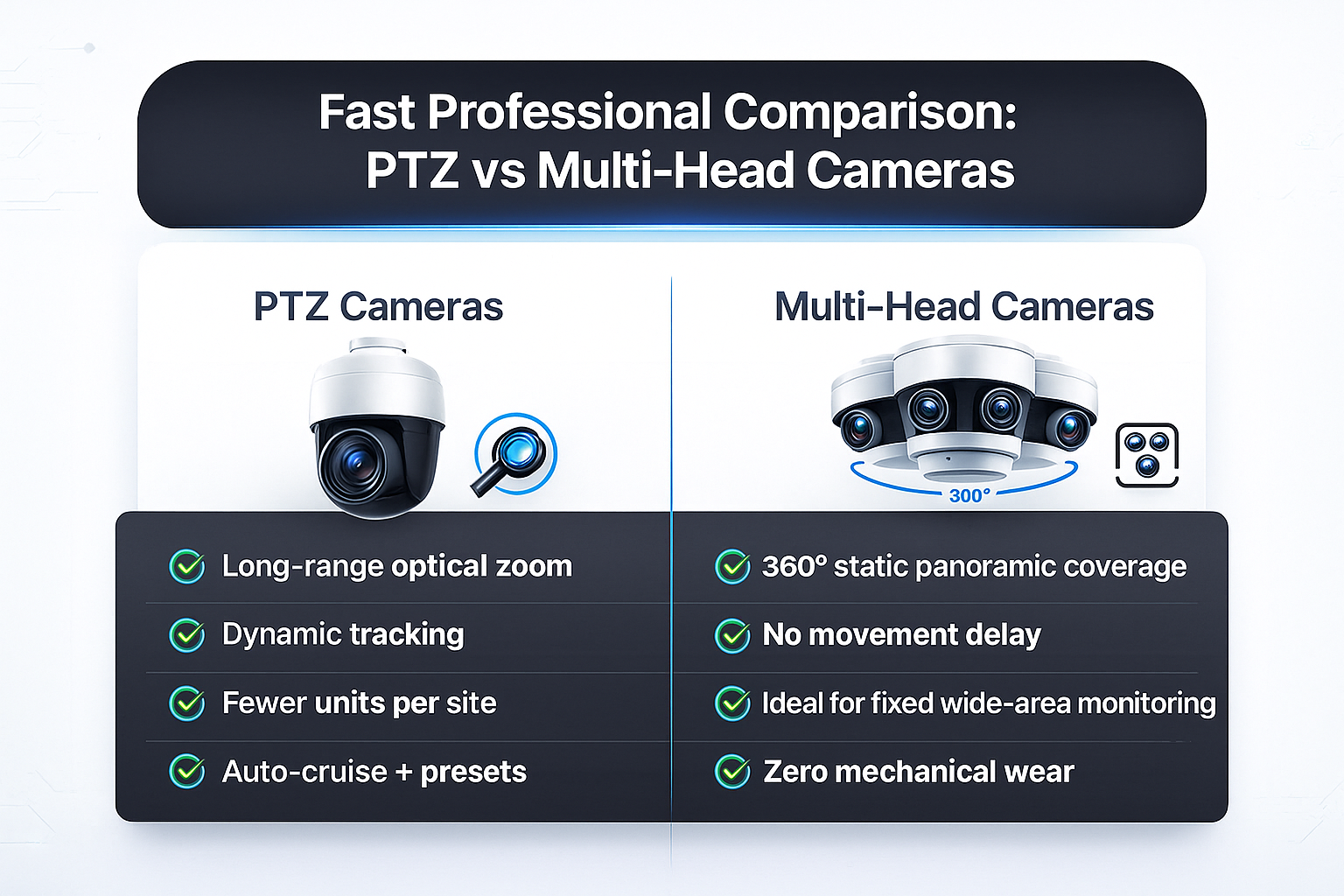
PTZ Camera Advantages
Long-distance optical zoom enabling detailed inspection
Dynamic rotation to cover large scenes with fewer units
AI-based tracking for people and vehicles
Ideal for proactive monitoring where operators can control events
Suitable for:
Traffic intersections
Perimeter and border protection
Industrial yards and logistics hubs
Port and harbor surveillance
Multi-Head Camera Advantages
Multiple fixed-angle lenses provide complete panoramic coverage
Zero blind spots and no movement delay
Excellent for large indoor and semi-outdoor spaces
Ideal for continuous passive monitoring
Suitable for:
Shopping centers
Parking structures
Indoor halls
Warehouses
Which Should You Choose?
Professionals often adopt a hybrid strategy:
Rather than replacing each other, PTZ and multi-head cameras serve complementary roles in high-performance security systems.
Types of PTZ Cameras (Professional Breakdown)
Understanding PTZ categories helps integrators design optimized solutions and distributors build market-ready product portfolios.
1. By Deployment Environment
Indoor PTZ Cameras
Smooth, silent motors
Accurate color reproduction
Ideal for conference rooms, classrooms, churches, and streaming studios
Outdoor PTZ Cameras
IP66/IP67 protection
Built-in heater, fan, or wiper
Long-range IR (100–300m)
Designed for harsh weather and perimeter surveillance
2. By Connectivity Format
IP PTZ: Mainstream solution, supports ONVIF and VMS integration
SDI PTZ: For broadcast and low-latency transmission
NDI PTZ: For live streaming, church AV, remote production
PoE PTZ: Simplified cabling for engineering deployments
3. By Optical Zoom Range
12x / 20x → indoor or small venues
30x → outdoor security, campuses
40x+ → ports, highways, industrial zones
The correct zoom level determines performance in long-distance surveillance.
4. By Application
PTZ cameras serve applications including:
Key Evaluation Criteria for Distributors & Integrators
A professional procurement decision requires evaluating:
Optical clarity and dynamic range
IR illumination strength
Mechanical durability for continuous pivoting
Network stability and latency
VMS compatibility
Firmware update cycle
API/SDK support
Mounting and installation flexibility
Evaluating these areas ensures your deployment remains stable, scalable, and future-proof.
Applications Across Multiple Vertical Markets
High-quality PTZ cameras support a wide range of industries, such as:
Smart city monitoring
Airports and seaports
Industrial facilities and energy stations
Logistics centers and warehousing
Stadiums and public venues
Transportation corridors and highways
PTZ systems enable real-time tracking and situational awareness in critical environments where traditional fixed cameras fall short.
Why Work with a Professional PTZ Camera Manufacturer
Choosing the right manufacturer ensures long-term system reliability. Benefits include:
Access to stable high-quality PTZ models
Faster deployment with integrator-friendly design
OEM/ODM customization for distributors
Competitive pricing for global markets
Full integration documentation, SDKs, and firmware support
Reliable after-sales service and technical assistance
Discover Our Range of PTZ Cameras
We offer a comprehensive lineup of PTZ solutions engineered for professional environments:
12x–40x+ optical zoom models
IP, PoE, SDI, and NDI versions
AI-assisted tracking and analytics
Rugged outdoor units with enhanced IR
Low-noise indoor PTZ for conferencing and streaming
Full SDK and integration support for developers
Discover our range of PTZ Cameras designed to meet the demands of global distributors and system integrators seeking robust, high-performance solutions.
Conclusion
Selecting a PTZ camera manufacturer requires evaluating engineering capability, imaging performance, manufacturing consistency, and long-term support. When combined with an understanding of PTZ camera types and how they compare to multi-head systems, integrators and distributors can build powerful, scalable surveillance or production solutions.
Against the backdrop of a rapidly expanding global surveillance market—projected to reach USD 83.3 billion by 2028 and exceeding one billion deployed cameras by 2025—PTZ systems will continue to play a central role in advanced, large-scale monitoring.
For professional deployments across security, broadcasting, industrial monitoring, and transportation, partnering with a specialized PTZ manufacturer ensures your technologies remain reliable, competitive, and future-ready.
 +86-15022658927
  sales@ziwincctv.com
  English
 français
 Deutsch
 Español
 italiano
 русский
 português
 العربية
 tiếng việt
 ไทย
ไทย Türkçe
 Pilipino
 עברי
עברי Afrikaans
 Polska