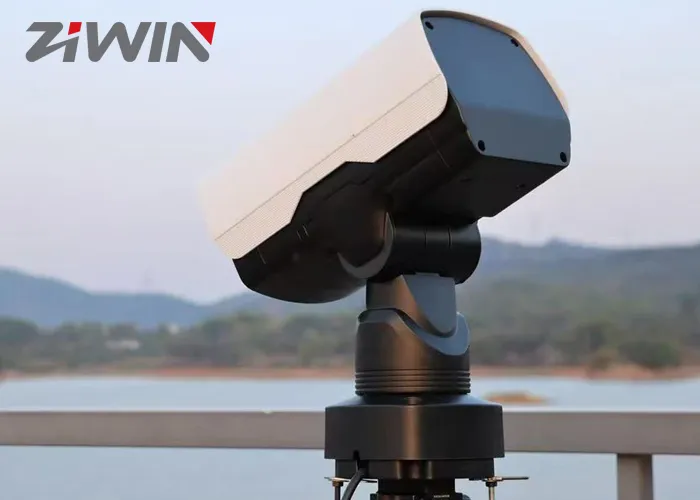
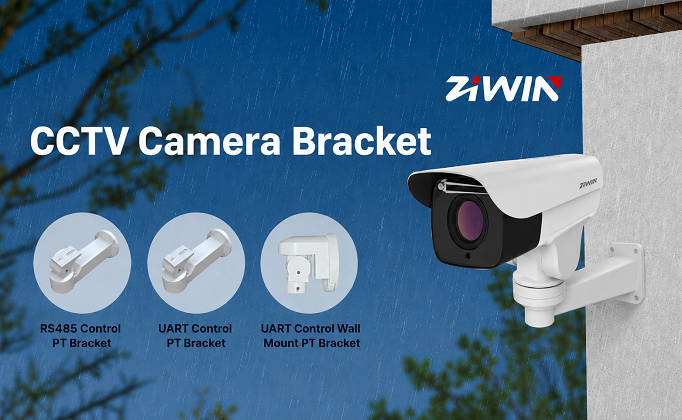
Now, when customers search for a pan tilt unit, they will often only look at the payload weight first. But that is just one part of the design process. A small thermal camera in a pan tilt system acts differently than a large radar antenna with the same mass at the end of it carried on another pan tilt system.
It is this distinction which explains the proliferation of custom pan tilt positioners in applications including long-range surveillance, radar tracking, EO/IR systems, anti-drone systems (scanning drone mini-guns), marine monitoring and industrial automation. A payload will also present its own specific complexities and requirements for the mechanical, electrical, and environmental environments where it is employed so no single solution often meets acceptable standards of stability, precision or reliability required by these projects.
A good pan tilt unit will always be designed based from payload level.
Real Characteristics of the Payload You Are Trained on
Advertisements You may also like: In most of the projects, it is common that you know only payload weight from the customer at first. But here are where seasoned pan-tilt manufacturers usually focus more on the payload's primary structure rather than its weight.
As an example, we have a small 15 kg thermal camera directly above the tilt axis that can be considered easy to control. The center of gravity is controlled, aerodynamic drag isn't too high, and rotational inertia remains in check. On the other hand, if the payload is a bulky radar antenna or a parabolic communications dish, then dynamics are quite different. It has the same weight, but with more surface, it provides much more aerodynamic load from wind and inertia while maneuvering (especially for high rotation speeds).
It shows why payload dimensions and the locati0n of the center-of-gravity is often more important than weight. When the center of gravity is placed excessively high or, prospectively, away from the tilt axis (the motors and gearboxes will now need to maintain a torque far higher than what they were designed to handle). This can lead to degradation of positioning precision, increase vibrations and decrease the lifespan of mechanical transmission systems over time. This is why so many heavy-duty pan-tilt systems have either side-mount or dual-arm configurations compared to a simple top-mounted design. These designs move the center of gravity closer to the rotation axis which adds stability.
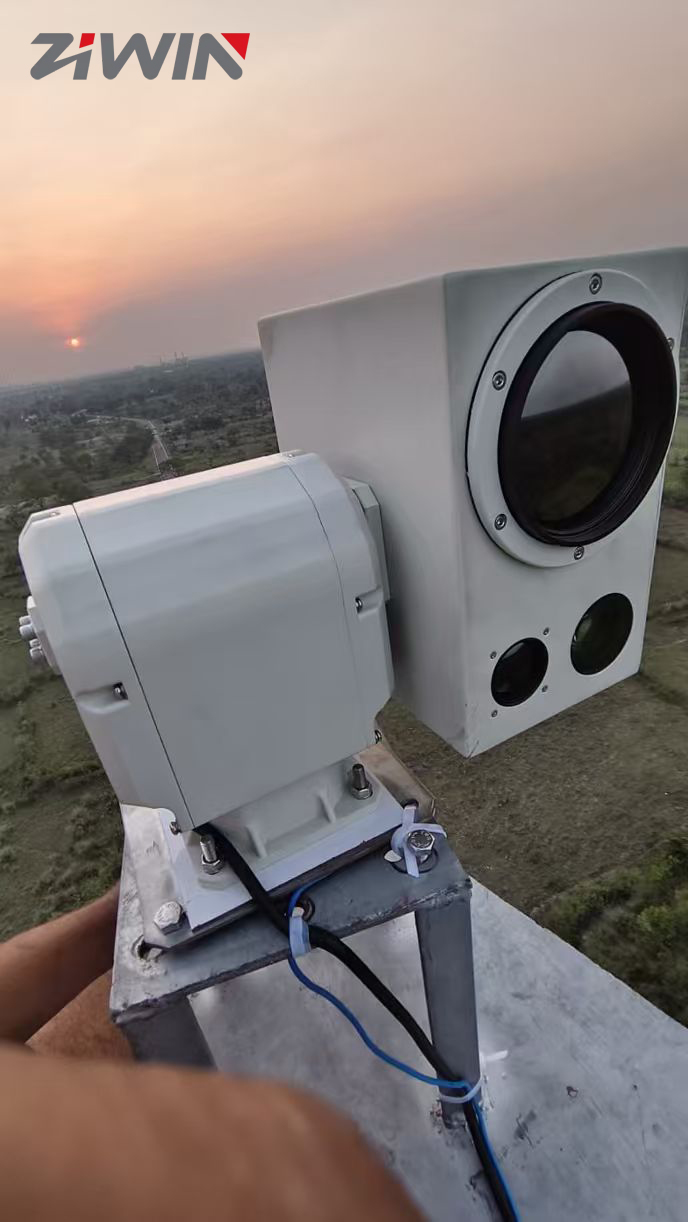
Different Payloads Need Distinct Mechanical Configurations
This is not good with any mechanical design of pan-tilt unit. The compact size and typically balanced weight of compact camera systems make them a good fit for top-load structures, as they are easier to stabilize than DSLRs. These configurations are generally simpler, more lightweight and less expensive.
Meanwhile, EO/IR systems that are larger in diameter (bigger than 100 mm or 4 inches), radars, and communication equipment usually require side-load or cradle-type mechanisms. In this case structural rigidity is absolutely paramount. Higher speed tracking of a larger payload translates into much higher dynamic forces during acceleration and deceleration. If the pan-tilt positioner is not sufficiently rigid, it will oscillate (i.e. track too far) and/or overshoot, or experience mechanical fatigue over a period of time.
A part of this is easily the long-range reconnaissance, even a small vibration might be sufficient to spoil those splendid pictures that you take. The install of a thermal camera with target monitoring distance from several kilometers can become unstable if the pan-tilt platform is lacking balance. This provides an insight as to why customization focuses more on the payloads weight capacity than its stability when in continual motion.
Balancing Speed and Stability
One of them is the ever unrelenting requirement from customers for a combination of high payload capacity with very high rotational speed. However, these two requirements are usually contradictive in nature.
With increasing rotational speed, the dynamic loads will be applied to the system are stronger. Motors need greater torque, gearboxes often see multiple orders of magnitude higher impact forces and the structural frame needs to resist more vibration. A pan-tilt unit that is built to move the antennas in very slow and precise positions may not perform well for UAV tracking applications.
If we take an anti-drone system or a radar cueing application as examples, it requires agile pan-tilt and accurate angles feedback. This balance comes from logically segmenting the role that speed, rigidity, control algorithms and payload inertia play.
In many scenarios increasing the speed leads to lower max payload. This trade-off is a fundamental aspect of mechanical design, and it further emphasizes the need for customization among professional applications.
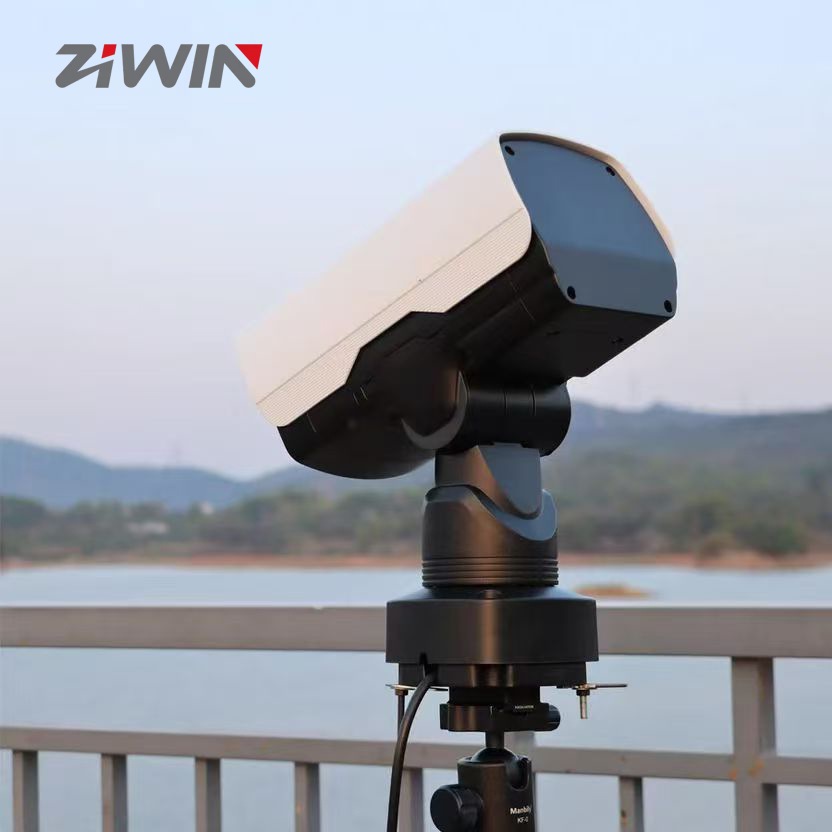
Customization of Slip Rings Will Get More and More Important
More sophisticated modern pan tilt systems than a simple motorized base. In many cases thermal cameras, visible-light cameras, laser illuminators, radar modules, communications systems and high-speed network transmission are integrated.
The result is, slip ring customization becomes one of the most important part in pan tilt unit design. Each of these projects requires different mixes of power, Ethernet, serial communication, RF transmission, or fiber optic signals. Others work only with standard RS422 communication and low-voltage power transmission, others need the involvement of Gigabit Ethernet, RF rotary joints or fiber optic rotary joints to carry out high-frequency data transfer.
It is vital to keep signals stable especially, in radar and rf applications. Bad impedance match or coupling of the shielding in the slip ring is most direct way to reduce communication. Electromagnetic interference is one of the bigger issues for high-speed imaging systems and is particularly strong shoestrings between power lines when USB 3.0 or more significant video signals are sent together facing side with the proverbial double whammy.
Hence, the slip ring has to never be seen simply as an add-on. It is among the central parts of the entire platform in a vast majority of advanced pan tilt systems.
Control Systems Get More Advanced
Older style pan-tilt positioners were primarily controlled using straightforward serial instructions like Pelco-D over RS485. However, the current projects necessarily require much more advanced control architectures.
Modern radar tracking systems and EO/IR platforms are increasingly using Ethernet-based communication, real-time angle feedback & high-frequency command updates. Some applications require radar and camera systems to synchronize together closely so that the pan-tilt unit has to get a target coordinates and move it as quickly as possible into the perfect position.
This evolution has led to an increased demand for custom firmware, TCP/IP control protocols, absolute coordinate commands and real-time feedback methods. In some situations, the pan-tilt system needs to be able to support what's called Slew-to-Cue functionality – where the radar automatically aims the camera platform on any detected targets.
With greater smartness these devices are not just going to be used as mechanical units but part of a wider joint sensing solution associated with the intelligence of what that pan-tilt this used to suit your needs.
Environmental Conditions Are Unavoidable
A pan tilt unit inside of a laboratory environment has very different challenges than a pan tilt unit sitting on top of an ocean-based tower, or at a mining site, or in the desert border area. In outdoor systems, the design needs to resist rain, dust, humidity and salt fog where there are significant temperature gradients between day at night and with the sun pouring down on them for hours on end. Marine environments are especially problematic since salt corrosion will induce failure of connectors, bearings, and mechanical components in a matter of days if not sufficiently protected.
As a result, many custom pan tilt systems contain internal components with sealing grades of IP66 or IP67, corrosion-resistant coatings, internal heating elements and special cable seals. For extremely low-temperature environments, low-temperature lubricants and built-in heating systems may be required to achieve steady, even performance.
In the early stages of project planning, environmental protection is often an afterthought, but for outdoor deployments over a long period of time it becomes a critical contributor to overall system reliability.
Customization Means Reliability, Not Just Specs
Most buyers decide on pan tilt units based off of payload rating or maximum speed. But real customisation is more than cranking these numbers higher and higher.
A well-balanced pan tilt system is the result of a careful consideration of many parameters, including payload structure, center of gravity, rotational inertia, environmental conditions, communication protocols, cable routing slack ring configuration and control architecture.
Decisions made at design level can have a major impact on long term reliability even the smallest of them. For example, cable routing that is not configured properly will hit motor for tilt movement or the center of gravity is not designed perfect so can hurt positioning stability. In long-range imaging applications, reduced structural rigidity can also lead to vibrations that degrade performance.
Keeping in mind practical engineering challenges, professional customization focuses on dealing with these issues earlier than being confronted at deployment of the system into the field.
Conclusion
Custom pan tilt units are custom designed for different types of payloads, as each presents its own engineering problem that must be solved which is why you only see them in professional surveillance, radar, tracking and industrial applications. There is so much more to well-engineered pan tilt positioners than payload weight-bearing; stability, precision; and a performance level that survives the test of time matter too. Regardless of whether it is to be used for thermal imaging, radar tracking, anti-drone measures or marine surveillance, effective customization must begin with a solid understanding of characteristics inherent to the payload.
Changes in this pan tilt system are seen as sensing technologies improve upon their actual function. It has become a key part of smart integrated systems providing accurate and reliable operation in difficult environments.
As a professional pan tilt unit manufacturer, ZIWIN specializes in deep customization for different application requirements.
We have provided customized pan tilt systems for customers in more than 40 countries worldwide, covering applications such as EO/IR, radar tracking, anti-drone systems, marine surveillance, and industrial automation.
If you have a custom requirement, please feel free to contact our technical team.
https://www.ziwincctv.com/contact-us/
 +86-15022658927
  sales@ziwincctv.com
  English
 français
 Deutsch
 Español
 italiano
 русский
 português
 العربية
 tiếng việt
 ไทย
ไทย Türkçe
 Pilipino
 עברי
עברי Afrikaans
 Polska