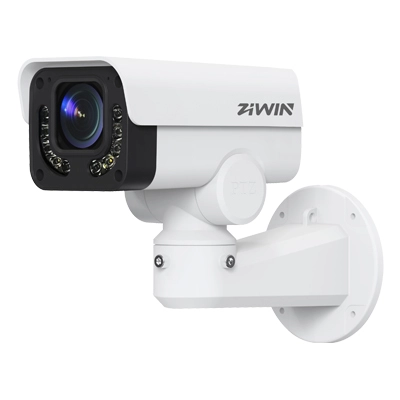
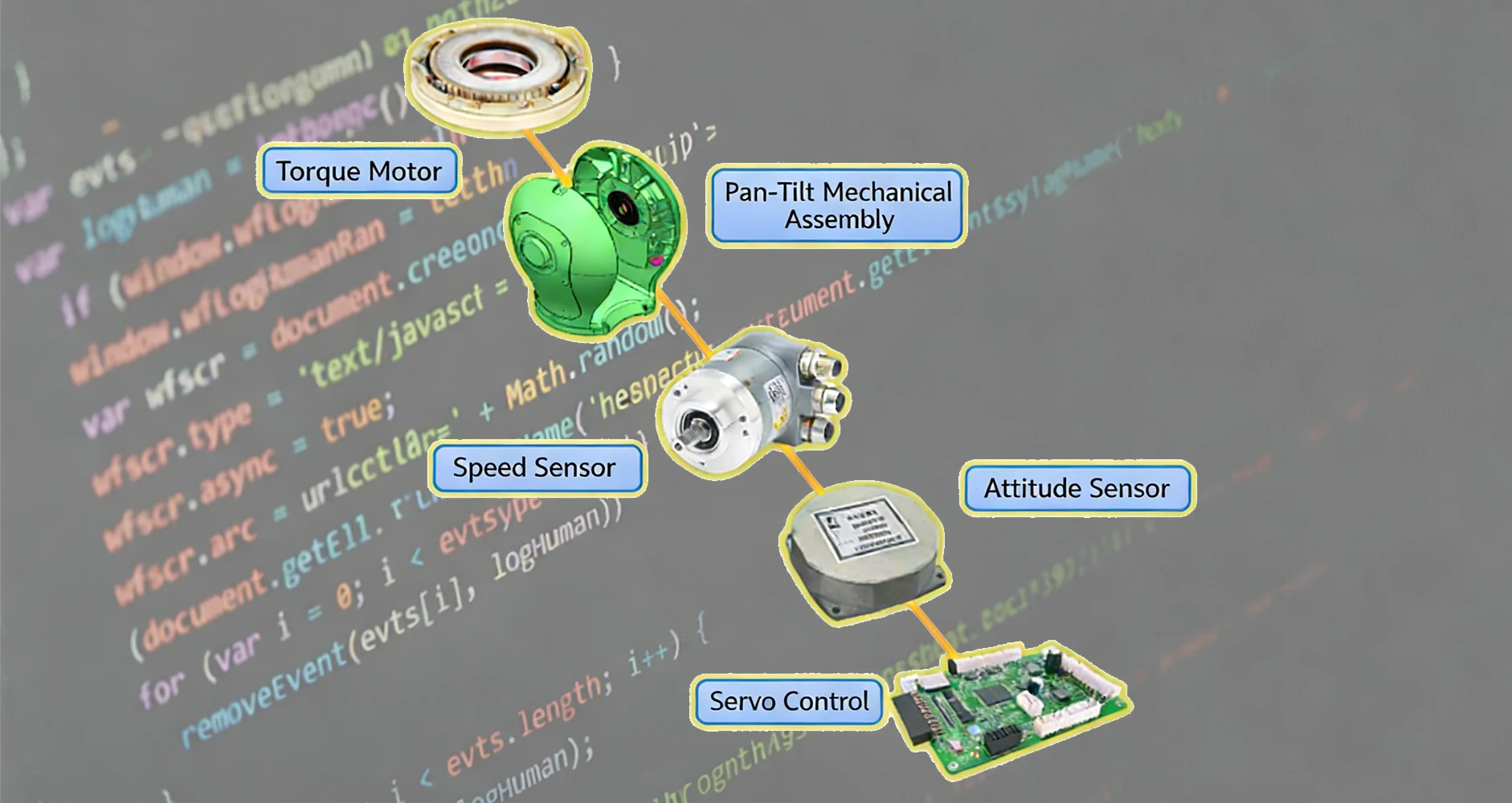
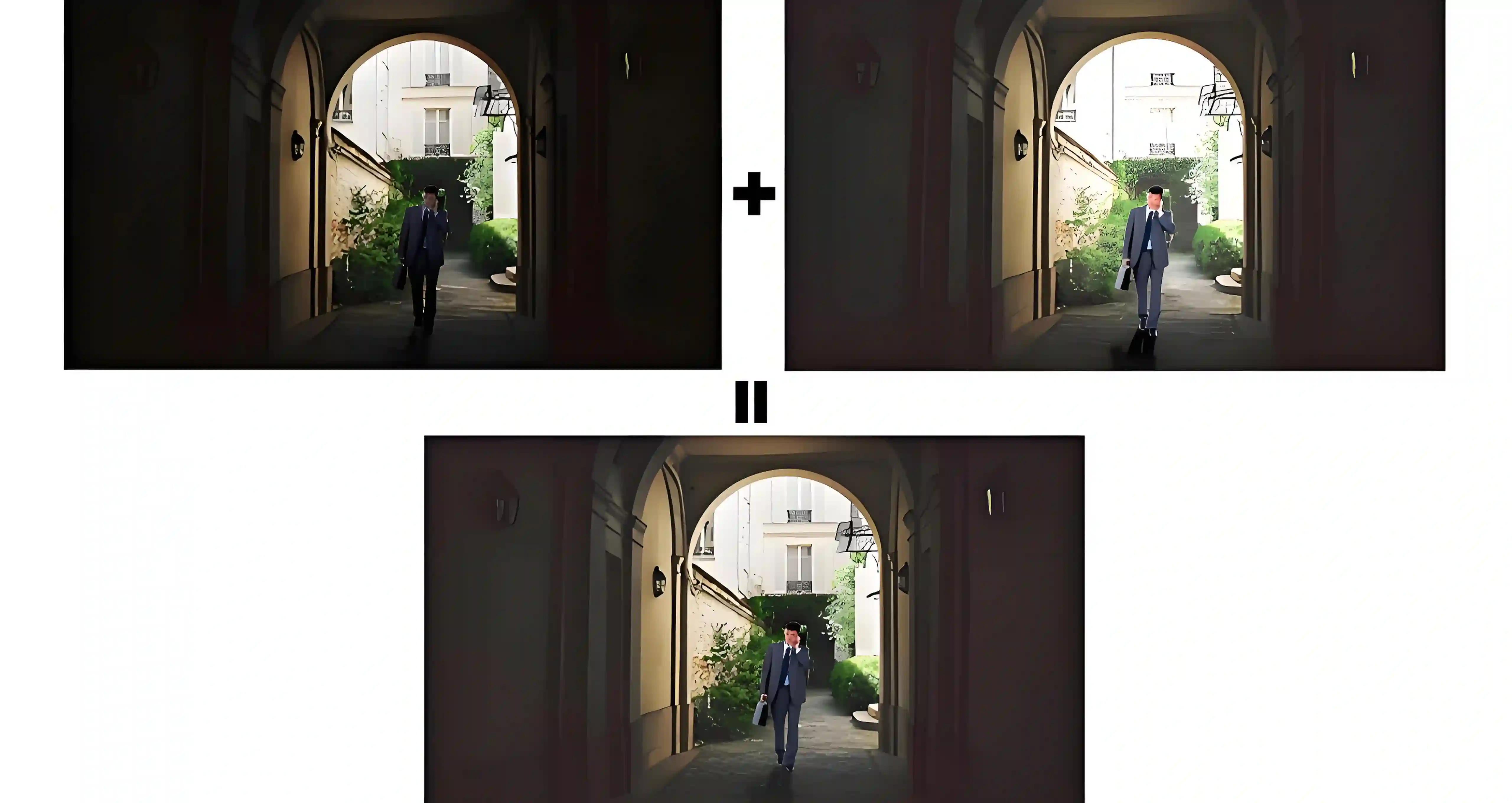
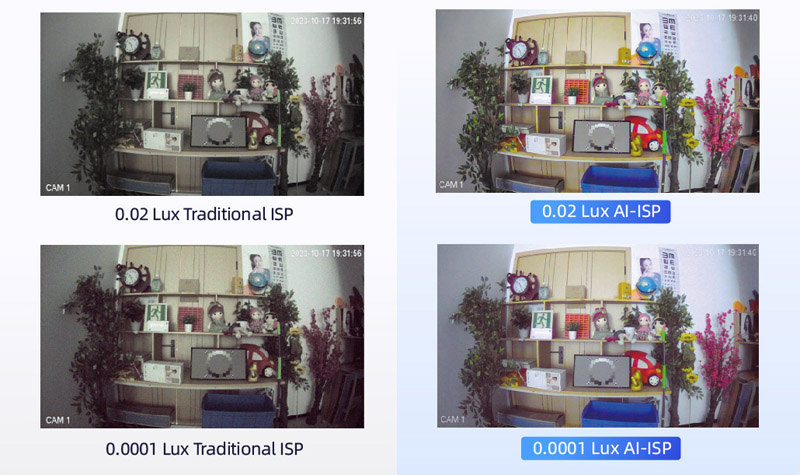
Ziwin AI ISP integrates AI into key modules like HDR, 3DNR noise reduction, and tone mapping, achieving breakthrough image quality improvements, especially in low light, backlighting, wide dynamic range, and motion scenarios.
AI-ISP stands for Artificial Intelligence Image Signal Processing. It is a technology that combines Artificial Intelligence (AI) algorithms with Image Signal Processing (ISP) techniques. AI-ISP enhances image and video quality by applying advanced AI algorithms to raw image data captured by cameras. This technology enables various image enhancement functions, such as dynamic range expansion, noise reduction, color optimization, image sharpening, thereby improving visual clarity and accuracy.
A traditional ISP (Image Signal Processor) is a specialized hardware module used for processing images, typically integrated within the image sensor. It is responsible for processing and optimizing the raw image data obtained from the sensor.
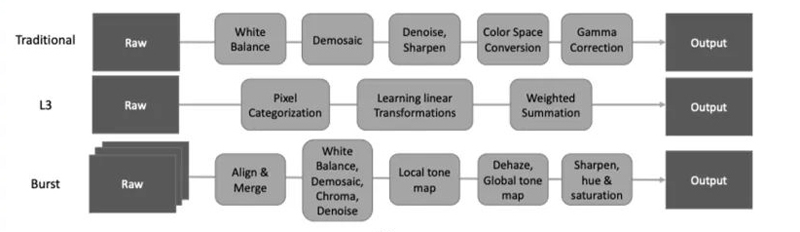
By integrating AI into key ISP modules such as HDR, 3DNR noise reduction, tone mapping, we achieve optimal performance and visual enhancement in AI-driven ISP. These modules, which are crucial and perceptible to the human eye, are optimized by AI to deliver the best image quality throughout the entire AI ISP process.
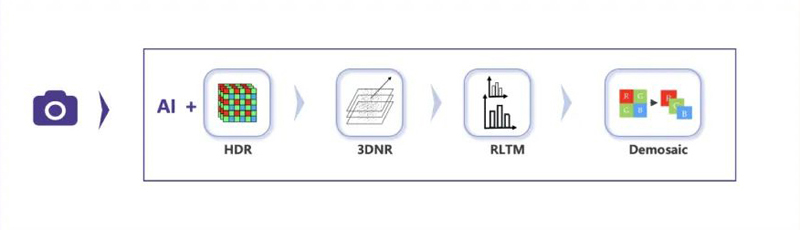
The image processing capabilities of traditional ISPs have been continuously optimized and upgraded. However, as the complexity of scenes increases and image quality demands rise, traditional ISP technology is nearing its optimization limits. Consistently producing high-quality images in challenging scenarios such as low light, backlighting, wide dynamic range, and motion remains a significant challenge for the visual perception industry. Against this backdrop, integrating AI technology into ISPs to break through the image quality optimization bottleneck has become an important research direction. This approach has made significant progress, leading to a substantial leap in achieving stable high-quality imaging in complex scenarios.
 +86-15022658927
  sales@ziwincctv.com
  English
 français
 Deutsch
 Español
 italiano
 русский
 português
 العربية
 tiếng việt
 ไทย
ไทย Türkçe
 Pilipino
 עברי
עברי Afrikaans
 Polska


.webp "Heavy Duty Pan Tilt Head with Load Capacity 80kg(176.37lb)")